Faris Adani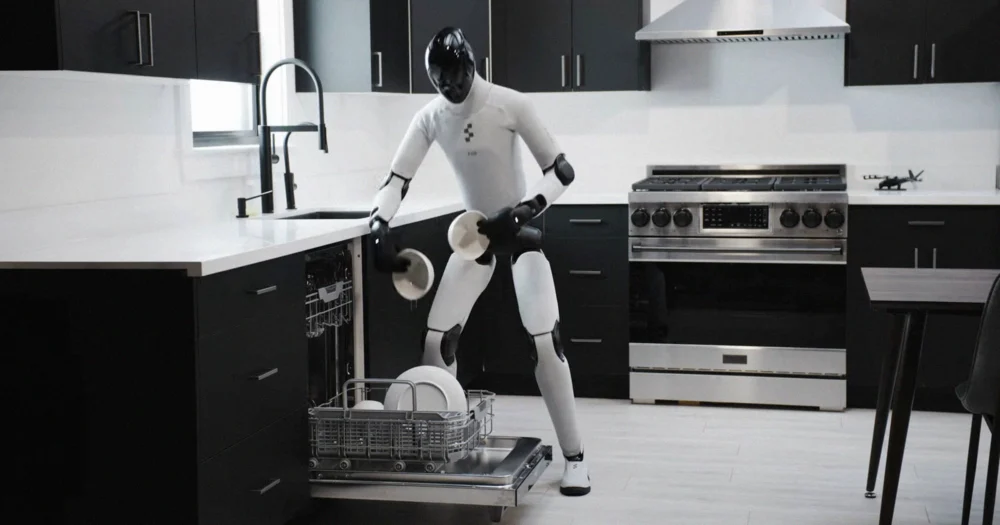
In a significant stride towards practical robotics, California-based company Figure AI recently unveiled a compelling demonstration of its humanoid robot, Figure 02, powered by the second iteration of its AI software, Helix 02. The latest video showcases the bipedal android performing a complex, multi-step household chore: seamlessly unloading a dishwasher, organizing clean dishes into appropriate cabinets and drawers, and then reloading it with dirty items. This display marks a crucial pivot in the narrative of humanoid robotics, moving beyond flashy, acrobatic feats towards the mundane yet deeply impactful tasks that promise to revolutionize daily life and various industries.
For years, the public imagination has been captivated by humanoid robots performing impressive, often spectacular, physical maneuvers. We’ve seen Boston Dynamics’ Atlas execute sophisticated backflips, Unitree’s creations delivering powerful punches, and even a disconcerting clip of a robot playfully — or perhaps aggressively — kicking its CEO. While these demonstrations undoubtedly highlight remarkable advancements in balance, locomotion, and dynamic control, their immediate practical application in everyday scenarios often remains elusive. The novelty of a robot performing parkour, while entertaining, doesn’t directly translate to solving common human problems or alleviating household burdens.
Figure AI, however, is charting a course that prioritizes utility and integration into human environments. Founded with the ambitious goal of bringing general-purpose humanoid robots to life, the company has quickly garnered attention, not just for its technological prowess but also for its strategic vision and impressive backing. With investments from tech giants like OpenAI, Microsoft, Nvidia, and prominent figures such as Jeff Bezos, Figure AI is positioning itself at the forefront of a movement aiming to create robots capable of assisting humans in a wide array of tasks, from logistics and manufacturing to domestic chores and elder care. Their Figure 02 robot, a sleek black-and-white android, serves as the physical embodiment of this vision, designed to operate in environments built for humans.
The recent video showcasing Figure 02’s dishwasher mastery is a testament to the advancements in its Helix 02 AI software. The demonstration is not merely about picking up and placing objects; it’s a meticulously choreographed sequence of actions that demand a high degree of perception, dexterity, navigation, and decision-making. The robot begins by identifying the open dishwasher, then systematically removes clean items—plates, bowls, cups, cutlery—and intelligently places them in their designated locations within the kitchen’s upper cabinets and drawers. This requires not only object recognition but also an understanding of typical kitchen organization. Following the unloading, Figure 02 then proceeds to load the dishwasher with dirty dishes, demonstrating its ability to handle different object types and spatial arrangements.
What truly sets this demonstration apart are the subtle, human-like flourishes embedded in Figure 02’s movements. Observers will note the robot using its foot to nudge the opened dishwasher door into a more convenient position, or bumping a drawer closed with its hip after placing items inside. These seemingly minor details are profoundly significant. They indicate that the Helix 02 AI is not merely executing pre-programmed movements but is relying heavily on sophisticated motion-captured training data. By learning from human examples, the robot acquires a more natural, efficient, and adaptable way of interacting with its environment, rather than rigid, robotic movements. This ‘learning by imitation’ approach, combined with advanced AI, allows for a fluidity that mimics human motor skills.
Figure AI proudly asserts that Helix 02 operates on a "single neural system" that controls the "full body directly from pixels, enabling dexterous, long horizon autonomy across an entire room." This technical claim highlights a paradigm shift from traditional robotics, which often relies on complex, segmented control systems and explicit programming for each task. A "single neural system" implies an end-to-end learning approach where the robot’s entire physical behavior, from perception (pixels) to action (full body control), is governed by a unified AI model. This architecture allows for more adaptive and robust performance, as the robot can react dynamically to unforeseen circumstances without requiring a separate module for each potential scenario.
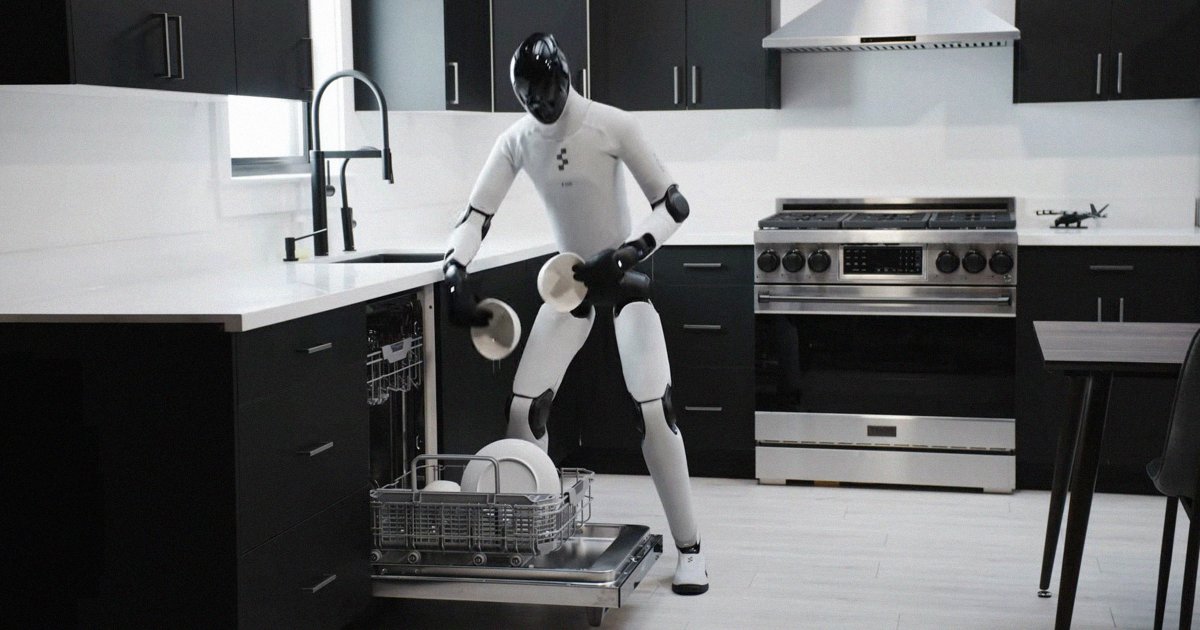
The company further emphasizes that the dishwasher demonstration is a "four-minute, end-to-end autonomous task that integrates walking, manipulation, and balance with no resets and no human intervention." This claim is critical. "Long horizon autonomy" refers to the robot’s ability to plan and execute a complex sequence of actions over an extended period without needing human restarts or corrections. The integration of walking (navigating the kitchen), manipulation (handling dishes), and balance (maintaining stability during movements) within a single, continuous task represents a significant engineering achievement. Figure AI believes this constitutes "the longest horizon, most complex task completed autonomously by a humanoid robot to date," underscoring the technical hurdles overcome.
The foundation of Helix 02’s impressive capabilities lies in its extensive training methodology. Figure AI reveals that the system was trained on "over 1,000 hours of human motion data and sim-to-real reinforcement learning." This hybrid approach is at the cutting edge of robotics AI. Human motion data, typically captured using motion tracking suits worn by human operators, provides the robot with a vast library of natural, efficient, and contextually appropriate movements. This is crucial for tasks that benefit from human-like dexterity and intuition. "Sim-to-real reinforcement learning" involves training the robot’s AI in a high-fidelity virtual simulation environment. In simulation, the robot can rapidly perform millions of trials and errors, learning optimal behaviors much faster and safer than in the real world. Once optimized in simulation, these learned policies are then transferred to the physical robot, a process known as "sim-to-real transfer." This combination allows Figure 02 to acquire sophisticated skills efficiently and then apply them effectively in unpredictable physical environments.
This latest demonstration isn’t an isolated incident but part of a consistent pattern of practical skill development by Figure AI. Previous videos have showcased Figure 02 adeptly sorting packages in a logistics warehouse, loading a washing machine, and even folding laundry with surprising finesse. These cumulative demonstrations indicate a deliberate strategy to develop a general-purpose robot capable of performing a wide range of useful, repetitive, and often tedious tasks that currently consume significant human time and effort. From factory floors and warehouses to residential settings, the potential applications are vast.
However, as with all groundbreaking tech demos, a healthy dose of skepticism is warranted. While the Figure 02’s performance is undeniably impressive, it occurred in a carefully controlled and likely meticulously prepared kitchen environment. The real world is far messier and more unpredictable. A truly autonomous household robot would need to contend with variations in kitchen layouts, different types and sizes of dishware, unexpected obstacles, human interference, and varying levels of mess. The challenge lies in how well Figure 02’s AI can generalize these learned skills to novel and unstructured situations. Flashy tech demos are often designed to showcase peak performance under ideal conditions, and the transition to chaotic, real-world unpredictability remains a significant hurdle for all robotics companies.
Looking ahead, the implications of robots like Figure 02 mastering domestic tasks are profound. The automation of household chores could free up immense amounts of human time, potentially redefining work-life balance and enabling individuals to focus on more creative, intellectual, or leisure pursuits. Beyond domestic applications, the technologies demonstrated by Figure AI have direct relevance to industries facing labor shortages or seeking to automate dangerous or monotonous tasks. Logistics, manufacturing, retail, and even elder care could be transformed by general-purpose humanoids capable of adapting to various environments and tasks.
The field of humanoid robotics is rapidly becoming a competitive arena, with players like Tesla Bot (Optimus), Agility Robotics (Digit), Sanctuary AI, and Apptronik all vying for leadership. Each company brings its unique approach to hardware design, AI development, and application focus. Figure AI’s emphasis on general-purpose AI, powered by extensive human motion data and reinforcement learning, positions it as a strong contender. The ability to perform complex, multi-step tasks like loading a dishwasher, which requires both fine motor control and intelligent sequencing, demonstrates a maturity in their AI and hardware integration that is pushing the boundaries of what humanoid robots can achieve.
In conclusion, Figure 02’s demonstration of flawlessly loading and unloading a dishwasher, powered by its Helix 02 AI, represents more than just an impressive technical feat. It signifies a tangible step towards the realization of truly useful, adaptable, and human-assisting robots. While challenges remain in translating these controlled demonstrations to the unpredictable chaos of everyday life, Figure AI’s consistent progress in tackling practical, multi-faceted tasks suggests a future where humanoid robots could become indispensable members of households and workforces, ushering in an era of unprecedented automation and assistance.