Faris Adani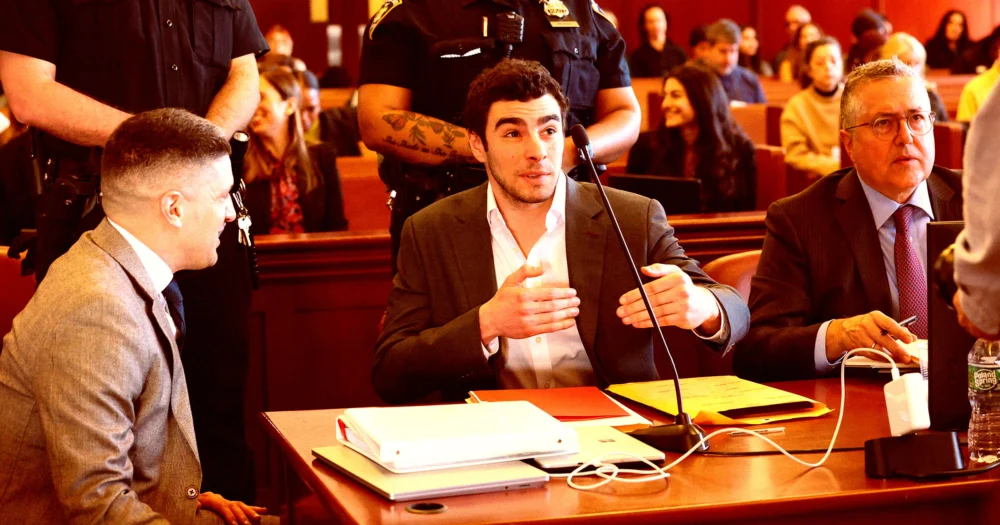
In a development as bizarre as the murder case it concerns, a man clad in the uniform of an FBI agent made a brazen, yet ultimately futile, attempt to orchestrate the release of Luigi Mangione, the individual charged with the high-profile assassination of health insurance CEO Brian Thompson, from a Brooklyn detention center. This audacious act unfolded at the Metropolitan Detention Center, adding another layer of surreal intrigue to a case already brimming with public fascination, protests, and even digital devotion. The impersonator, later identified as 36-year-old Mark Anderson, now finds himself behind bars in the very facility he sought to infiltrate, arrested on charges of impersonating a federal officer.
The incident, first reported by the Associated Press, detailed Anderson’s arrival at the federal jail, presenting himself as an FBI agent tasked with securing Mangione’s release. His attire, while mimicking federal law enforcement, apparently lacked the crucial details that would withstand scrutiny from seasoned correctional officers. Anderson, in a move that immediately raised red flags, claimed to possess official "paperwork signed by a judge" authorizing Mangione’s immediate liberation. However, the facade quickly crumbled under basic questioning. When asked for his federal identification, Anderson was reportedly unable to produce it, instead offering his personal driver’s license – a glaring omission for anyone legitimately operating in an official capacity. Further compounding the absurdity, a search of his bag revealed not a toolkit for a daring escape, but rather a circular blade resembling a pizza cutter wheel and a barbecue fork, items decidedly out of place for a federal agent on official business. The ruse, amateurish in its execution, was quickly discovered, leading to Anderson’s swift arrest.
Mark Anderson’s background paints a picture of a troubled individual, lending a tragic undertone to his misguided efforts. Federal prison records, as reviewed by the AP, indicate a long history of arrests and convictions spanning two decades, predominantly related to drug and alcohol offenses. He has reportedly spent considerable time in homeless shelters, a testament to a life marked by instability. Crucially, Anderson has openly acknowledged suffering from significant mental health issues, stating that he is classified as "fully disabled because of mental illness" by the Social Security Administration. This personal history, particularly his struggles with mental health and the systemic challenges faced by those without stable housing or adequate support, raises questions about his motivations and whether his desperate act was, in some way, connected to the very issues that fueled the public’s interest in Luigi Mangione’s case.
The man Anderson attempted to free, Luigi Mangione, stands accused of one of the most shocking corporate assassinations in recent memory. Brian Thompson, the CEO of UnitedHealthcare subsidiary, was fatally shot in Manhattan in December 2024. The murder sent shockwaves through the corporate world and ignited a fierce debate across social media and traditional news outlets about the American healthcare system. Mangione’s alleged motive, reportedly rooted in deep-seated frustrations with the healthcare industry, resonated with a segment of the public. Evidence at the crime scene, including bullet casings reportedly inscribed with words that seemed to articulate a grievance against health insurance companies, underscored the deliberate and symbolic nature of the act. Mangione was apprehended shortly after the murder and subsequently moved to the Metropolitan Detention Center in Brooklyn, setting the stage for the bizarre events that would follow.
Since his arrest, Luigi Mangione has become an unlikely, and to some, controversial figurehead. The legal proceedings against him have drawn significant attention, with a "major following" emerging. Protesters have gathered outside courtrooms, chanting in support, viewing Mangione not merely as a criminal suspect but as a symbol of resistance against a perceived unjust healthcare system. The phenomenon extended even further into the digital realm, with reports of a woman claiming to be "married to an AI version of him," highlighting the strange and intense public fascination surrounding the case. This cult-like devotion, born from a potent mix of societal frustration and the sensational nature of the crime, undoubtedly played a role in inspiring Anderson’s ill-conceived rescue attempt.
Mangione’s legal battle is complex, involving both federal and New York state prosecutors. He has pleaded not guilty in both cases, setting the stage for protracted court proceedings. A significant development occurred well over a year after his arrest, when a Manhattan district court judge ruled in January 2026 that the 27-year-old would not face a possible death penalty in the federal case. This decision shut down an attempt by the Trump administration’s Justice Department to pursue capital punishment, a move that would have escalated the stakes significantly. The denial of the death penalty was a crucial juncture, signaling the contours of the upcoming legal arguments and the nature of justice sought in this highly charged case.
Beyond the immediate crime and the subsequent bizarre rescue attempt, the entire saga surrounding Luigi Mangione has served as a powerful, albeit dark, catalyst for a renewed public discourse on the United States healthcare system. Brian Thompson’s murder, whether intended or not, undeniably sparked a heated debate over the effectiveness, accessibility, and perceived injustices within an industry notorious for skyrocketing bills, labyrinthine bureaucracy, and frequent denials of coverage that can lead to financial ruin or worse for countless Americans. The profound frustration experienced by many, struggling with medical debt, lacking adequate insurance, or battling for necessary treatments, created a fertile ground for the sympathetic, if misguided, public reaction to Mangione. It is entirely plausible that Mark Anderson, in his own battles with mental health and potentially navigating the complexities of accessing care while experiencing homelessness, may have personally suffered the very "fate" of being excluded or underserved by the system, thereby feeling a desperate, if irrational, connection to Mangione’s alleged cause. This layering of personal tragedy, systemic critique, and the absurd theatricality of the events underscore the deep societal fissures brought to light by this extraordinary case. The legal proceedings continue, but the questions raised about justice, mental health, and the future of healthcare in America will resonate long after the verdicts are rendered.