Faris Adani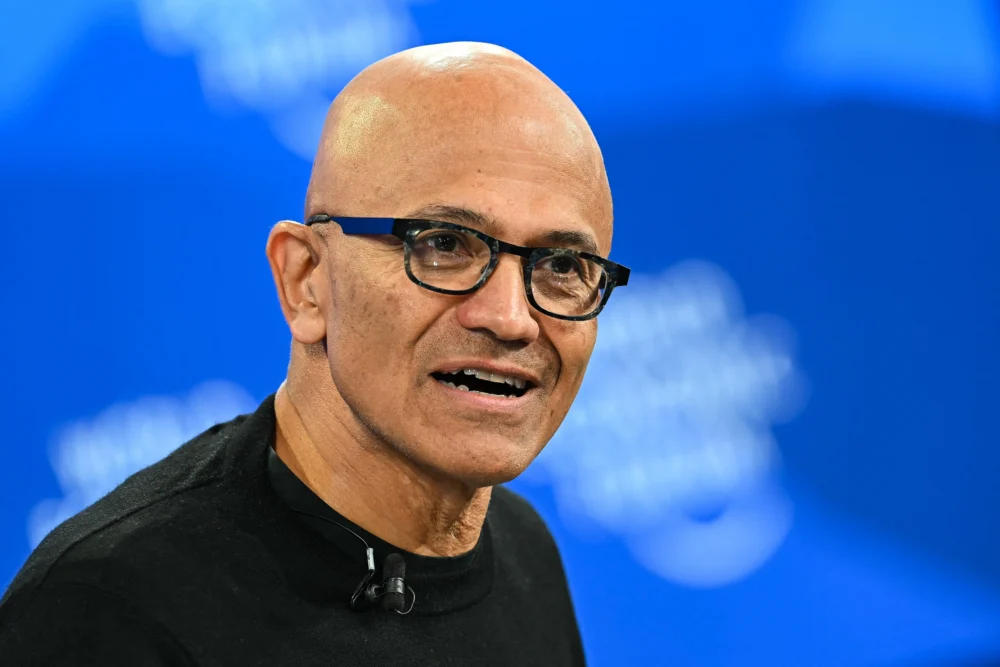
Redmond, WA – January 28, 2026 – In a stunning turn of events that sent shockwaves through the global technology sector, Microsoft experienced one of the most brutal single-day stock plunges in its illustrious history this Thursday. The tech behemoth’s share price plummeted by nearly 12 percent following the release of its latest quarterly results, erasing over $400 billion from its market capitalization. This precipitous decline marks the company’s steepest single-day slide since the chaotic market conditions of March 2020, when the initial onset of the COVID-19 pandemic triggered widespread economic panic, and stands as a stark reminder that even the most formidable giants are not immune to investor skepticism.
The sheer scale of the financial fallout is staggering, representing not just a significant setback for Microsoft, but also a potent indicator of the heightened scrutiny currently facing the entire artificial intelligence landscape. What makes this collapse particularly perplexing, and indeed, alarming, is that it occurred despite Microsoft actually surpassing several key financial expectations for the quarter. The company reported a robust net income, which climbed by an impressive 23 percent year-over-year to nearly $31 billion. Total revenue also saw a healthy increase of 17 percent, reaching $81.3 billion – approximately a billion dollars more than what most Wall Street analysts had projected. By traditional metrics, these were respectable, even strong, earnings. Yet, the market reacted with an almost visceral rejection, prioritizing one overriding concern above all others: Microsoft’s colossal, and increasingly questioned, investment in artificial intelligence.
At the heart of investor anxiety lies Microsoft’s aggressive, some might say reckless, AI spending spree. The company’s total capital expenditures soared by an astounding 66 percent in the fourth quarter, hitting an unprecedented record of $37.5 billion. The vast majority of this monumental outlay has been channeled into building out a global network of advanced AI data centers, primarily to bolster its cornerstone Azure cloud computing business. These aren’t just any data centers; they are highly specialized infrastructures designed to host and process the gargantuan computational demands of modern AI models, requiring cutting-edge GPUs, vast storage arrays, and sophisticated cooling systems. The strategic rationale is clear: to position Azure as the preeminent platform for AI development and deployment worldwide. However, the market’s reaction suggests a profound doubt about the return on this staggering investment.
Azure, Microsoft’s crown jewel in the cloud, did report a solid 38 percent bump in revenue, indicating continued growth in the highly competitive cloud market. Nevertheless, this growth rate represents a slight deceleration compared to the previous year, a subtle signal that amplified investor uncertainty. Analysts are now openly questioning whether the business will be able to generate sufficient revenue and profit margins to justify the tens of billions poured into its data center expansion. Compounding these concerns, a December 2025 report from The Information had already cast a long shadow, revealing that Azure was struggling significantly to onboard its much-hyped "autonomous AI agents" with business customers. The report detailed widespread resistance from enterprises, leading to internal sales quotas for these advanced AI products being slashed by as much as 50 percent. This inability to translate cutting-edge AI capabilities into tangible, sellable products for its enterprise client base has clearly eroded confidence in the immediate profitability of these massive AI bets.
The skeptical sentiment from financial strategists was palpable even before the market opened on Thursday. Matthew Maley, chief market strategist at Miller Tabak + Co, articulated the prevailing concern: “Since it is becoming even more evident that Microsoft is not going to garner a strong ROI from their massive AI investment, their shares need to be revalued back down to a level that is more consistent with its historic fair value.” Maley’s prediction proved chillingly accurate, underscoring a growing consensus that the enthusiasm surrounding AI, while justified in principle, may have led to an unsustainable valuation bubble for companies making outsized investments without a clear path to profitability. The market, it appears, is demanding concrete evidence of commercial viability, not just technological prowess.
Further complicating Microsoft’s narrative is its deep entanglement with OpenAI. The latest earnings report revealed that Microsoft boasts more than $625 billion in unfulfilled contracts for its cloud business – an impressive figure on the surface. However, a colossal $350 billion of that sum, representing well over half, is tied directly to OpenAI. This extraordinary concentration of contractual obligations to a single entity has ignited fears among investors about Microsoft placing "too many eggs in one basket." The strategic partnership with OpenAI, which saw Microsoft inject billions into the AI research firm and secure exclusive licensing rights to its advanced models, was initially hailed as a masterstroke. Yet, the dependency it has created now looks like a potential vulnerability.
Moreover, despite its significant investment in OpenAI, Microsoft has faced an uphill battle in making a substantial impact with its own suite of AI-powered products, particularly its Copilot assistant. Heavily leveraging OpenAI’s foundational technologies, Microsoft’s Copilot, integrated across its Windows, Edge, and Microsoft 365 ecosystems, has often been perceived by tech enthusiasts and even some business users as an inferior, or at least less groundbreaking, version of OpenAI’s standalone ChatGPT. While Microsoft 365 Copilot, the business-focused iteration integrated into applications like Word, Excel, and PowerPoint, recently achieved 15 million annual users – a respectable number in isolation – it hasn’t translated into the kind of transformative market adoption or revenue generation that would assuage investor fears about the overall AI strategy. The question remains: is Copilot a true differentiator, or merely an expensive add-on that struggles to justify its premium?
During the earnings call, CEO Satya Nadella attempted to reframe the narrative and reassure analysts. “As an investor, when you think about our capex, don’t just think about Azure, think about Copilot,” Nadella stated, as quoted by the Financial Times. He elaborated, “We don’t want to maximize just one business of ours. We want to be able to allocate capacity, while we are supply constrained, that allows us to build the best portfolio.” Nadella’s comments suggest a strategy of diversified AI investments, aiming to weave AI capabilities into every facet of Microsoft’s extensive product ecosystem, from cloud infrastructure to end-user applications. He is essentially asking investors to trust in a long-term vision where the cumulative effect of these AI integrations will yield substantial returns, even if individual components aren’t immediate blockbusters. However, in the current climate of heightened investor scrutiny, such long-term promises are increasingly being met with demands for short-term evidence of profitability.
The context of this historic plunge cannot be isolated from the broader tech landscape of early 2026. After a period of exuberant growth fueled by pandemic-era digital transformation and an initial wave of AI enthusiasm, the market has entered a more discerning phase. Investors are no longer content with promises of future AI revolutions; they are demanding clear, actionable business models and demonstrable returns on the billions being poured into this new frontier. Other tech giants like Google, Amazon, and Meta are also heavily invested in AI, but each faces its own set of challenges in convincing the market that their spending is prudent and their strategies are sound. The Microsoft episode serves as a powerful cautionary tale, indicating that even companies with robust balance sheets and diversified revenue streams can be severely penalized for perceived missteps in the high-stakes AI race.
The coming quarters will be critical for Microsoft. The company must not only demonstrate accelerated growth in Azure’s AI-centric offerings but also prove the value proposition of Copilot and its other AI products to a skeptical business market. Regaining investor confidence will require more than just impressive revenue figures; it will demand a clear, quantifiable return on its massive AI capital expenditures and a more convincing narrative about the synergies between its various AI initiatives. The Wile E. Coyote-worthy cliff-plunge of its stock valuation is a stark reminder that in the volatile world of cutting-edge technology, even the most established leaders must continually prove their worth, especially when embarking on costly, transformative ventures like the race for AI supremacy. The future of Microsoft, and to some extent the trajectory of enterprise AI adoption, hinges on its ability to navigate this challenging period and demonstrate that its monumental bets will, in fact, pay off.