Faris Adani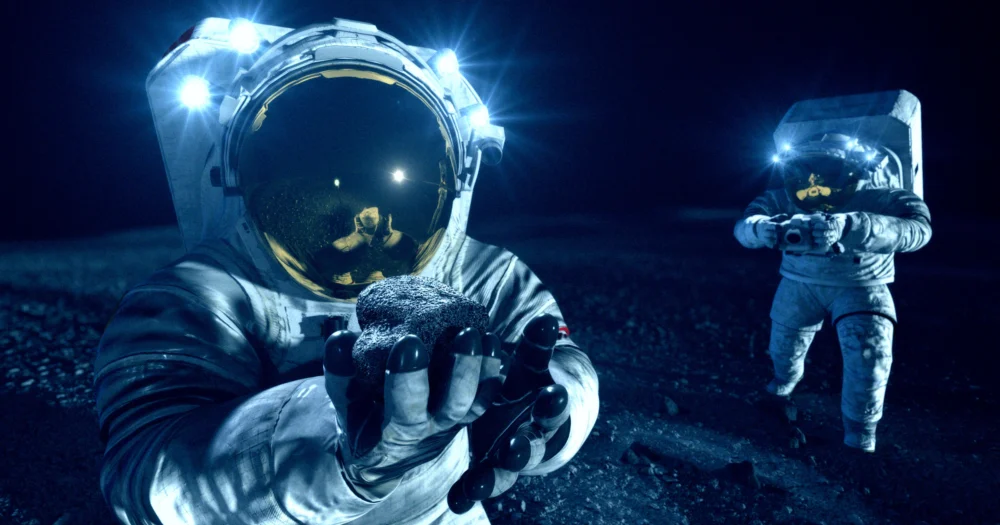
The challenge of exploring the lunar environment is multifaceted and extreme. Astronauts stepping out onto the Moon will face brutal temperature swings, relentless space radiation, and the complete absence of an atmosphere. Beyond these environmental hazards, the physical demands of operating in a bulky spacesuit under one-sixth gravity present their own unique set of obstacles. It’s a task that could physically tax astronauts even more intensely than performing a spacewalk outside the International Space Station. While NASA has yet to finalize its choice between Blue Origin’s and SpaceX’s offerings for the Human Landing System that will transport astronauts to and from the lunar surface, the spacesuit itself, developed by private company Axiom Space under a $228 million contract, is already drawing scrutiny.
As reported by Ars Technica, former NASA astronaut and microbiologist Kate Rubins, who retired last year after logging an impressive 300 days in space, recently voiced significant concerns regarding Axiom Space’s lunar suit. Speaking at a meeting of the National Academies of Sciences, Engineering, and Medicine, Rubins highlighted the profound physical stress that future Moonwalkers will endure. "What I think we have on the Moon that we don’t really have on the space station that I want people to recognize is an extreme physical stress," she stated, drawing on her extensive experience in extravehicular activities (EVAs).
Rubins’ primary apprehension stems from the anticipated duration and frequency of lunar EVAs. Unlike ISS spacewalks, which are typically less frequent and shorter in duration, Artemis III astronauts are expected to be "in these suits for eight or nine hours" and conducting EVAs "every day." This regimen, combined with the lack of sleep and the inherent difficulties of working in a pressurized suit, could lead to unprecedented levels of fatigue and potential performance degradation.
The Axiom Space suit, while representing a significant technological leap from the Apollo-era suits, still weighs a substantial 300 pounds on Earth. Although the Moon’s one-sixth gravity will significantly reduce this effective weight, the sheer mass of the suit’s components – including multiple layers for radiation and thermal protection, sophisticated life support systems, and robust articulation joints – contributes to its overall bulk. Rubins acknowledged the improvements, noting, "I think the suits are better than Apollo, but I don’t think they are great right now." She specifically cited "flexibility issues" and the concerning prediction that "people are going to be falling over."
Elaborating to Ars Technica, Rubins underscored that while the suits are "definitely much better than Apollo," they "remain still quite heavy." She vividly described the challenge of regaining an upright position after a fall, a common occurrence during the Apollo missions, as a "jumping pushup." This maneuver, she warned, is "non-trivial" and a "risky maneuver," potentially leading to injury or exhaustion that could compromise a mission. The risk isn’t just physical; a fall in a heavy suit could damage critical life support systems or delicate instruments, turning a minor stumble into a mission-critical emergency.
The historical context of lunar exploration underscores Rubins’ concerns. The iconic Apollo A7L suits, while revolutionary for their time, offered limited mobility. Astronauts often found themselves hopping or shuffling across the lunar surface, struggling with tasks that required bending or fine motor skills. While the Axiom Space suit boasts greatly enhanced flexibility, allowing astronauts to kneel down and pick up objects, the transition from Earth-based testing to actual lunar operations in partial gravity presents unique challenges that are hard to fully replicate. The South Pole of the Moon, the target landing site for Artemis III, further complicates matters with its rugged terrain, steep craters, and permanently shadowed regions, demanding unprecedented agility and durability from the spacesuits.
However, not everyone within NASA shares Rubins’ level of concern. Current NASA astronaut and physician Mike Barratt offered a more optimistic perspective during the same committee meeting, stating that the "suit is getting there." He highlighted the extensive testing already conducted, noting, "we’ve got 700 hours of pressurized experience in it right now." Barratt also contended that "bending down in the suit is really not too bad at all," suggesting that specific aspects of mobility have seen considerable improvement.
NASA’s rigorous testing protocol for the new suits includes various simulations. The agency has already put the suit through its paces underwater at NASA’s Neutral Buoyancy Lab (NBL), simulating the weightlessness of space, though not the partial gravity of the Moon combined with the suit’s mass. Future tests will include parabolic flights, which can briefly simulate lunar partial gravity, and vacuum chamber tests to verify life support systems in space-like conditions. These iterative tests are crucial for refining the suit’s design and ensuring its readiness for the lunar environment.
Beyond mobility and weight, other critical factors loom large. Lunar dust, or regolith, is perhaps one of the most insidious challenges. It is extremely abrasive, electrostatically charged, and gets everywhere, posing a significant threat to suit seals, joints, and visibility. The Apollo missions experienced extensive issues with dust, which clogged mechanisms, abraded layers, and was even inhaled by astronauts inside the lunar module. The Axiom suit must incorporate advanced dust mitigation strategies to prevent these problems from compromising longer-duration missions.
Radiation protection is another paramount concern. Astronauts on the Moon are exposed to higher levels of solar particle events (SPEs) and galactic cosmic rays (GCRs) than those on the ISS, which is still largely protected by Earth’s magnetosphere. The suit must provide adequate shielding without becoming prohibitively heavy or bulky. Similarly, thermal control is vital, as the lunar surface can swing from scorching temperatures in direct sunlight to extreme cold in shadow. The suit’s design, including its exterior materials and internal cooling systems, must maintain a stable internal environment for the astronaut.
The integration of the suit with the chosen lunar lander is also a complex logistical puzzle. Egress and ingress procedures must be seamless and safe, especially when astronauts are fatigued or if an emergency arises. Furthermore, the ability to repair and maintain these sophisticated suits on the Moon, with limited resources and spare parts, will be crucial for establishing a sustained human presence.
The Artemis program represents an ambitious leap forward in human spaceflight, aiming not just for flags and footprints, but for a sustainable presence on the Moon as a stepping stone to Mars. The success of this vision hinges on every component, especially the ones that directly protect and enable human explorers. The partnership with Axiom Space for suit development signifies a shift towards commercial involvement, leveraging private sector innovation to accelerate progress. The Axiom Extravehicular Mobility Unit (AxEMU), as it’s formally known, is designed to be more versatile and capable than its predecessors, with features like interchangeable parts for different missions and a customizable fit for a wider range of astronauts, including women.
Ultimately, the debate between Rubins and Barratt highlights the inherent tension in pioneering new frontiers: the urgency to achieve ambitious goals versus the meticulous caution required to ensure safety and success. While the Axiom Space suit undeniably represents a significant advancement over the Apollo-era designs, the Moon remains an unforgiving environment. NASA has until sometime next year to finalize the design for its long-awaited Artemis III mission, along with other critical decisions, including how astronauts will get down to the lunar surface. The rigorous testing and refinement process currently underway are not merely technical exercises; they are essential steps in mitigating the risks and ensuring that when humanity finally returns to the Moon, its explorers are equipped with the best possible protection and tools to not just survive, but thrive. The fate of humanity’s next giant leap rests, in no small part, on the integrity and functionality of these cutting-edge spacesuits.