Faris Adani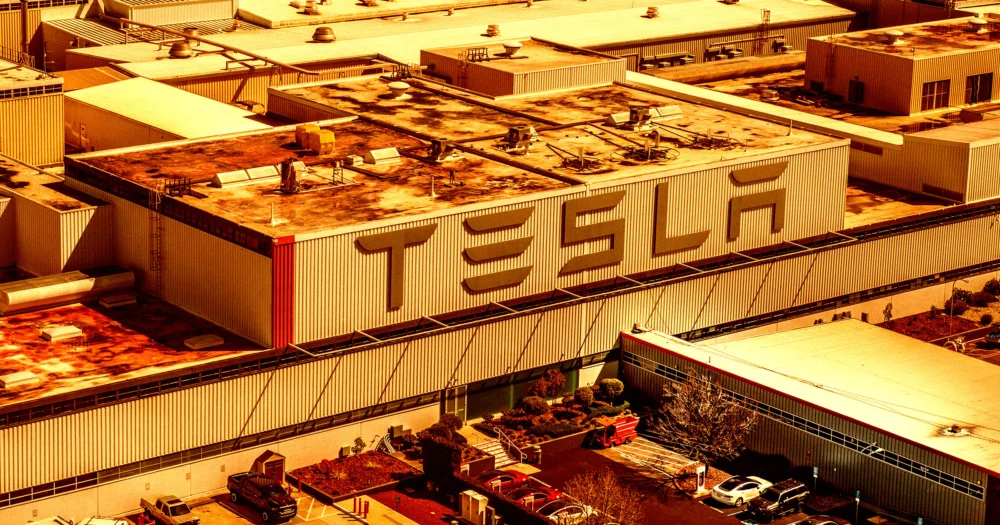
Tesla’s Radical Pivot: From Automotive Pioneer to AI and Robotics Giant
In a stunning declaration that marks a seismic shift for one of the world’s most influential companies, Tesla CEO Elon Musk has made good on his long-whispered threats to steer his electric vehicle (EV) maker away from its core automotive business. The new focus is firmly on artificial intelligence (AI) and its ambitious humanoid robot project, Optimus. This strategic pivot, announced during the company’s fourth-quarter earnings call, signals not just a change in product line but a fundamental redefinition of Tesla’s identity and future trajectory, away from the very industry it helped revolutionize.
Musk, known for his mercurial announcements and audacious visions, stated that “it’s time to basically bring the Model S and X programs to an end with an honorable discharge.” This pronouncement, referring to Tesla’s flagship luxury sedan and SUV, is the clearest indicator yet that the company is actively disengaging from significant portions of the car business amidst faltering sales and intensifying competition. The move effectively heralds the end of an era, sacrificing two iconic models that once defined the premium electric vehicle segment.
The End of an Era: Model S and Model X Bid Farewell
The decision to cease production of the Model S and X is not merely a product line adjustment; it’s a symbolic divorce from Tesla’s foundational offerings. “We expect to wind down S and X production next quarter and basically stop production,” Musk elaborated, acknowledging the sentimentality of the moment. “That is slightly sad, but it’s time to bring the S and X programs to an end, and it’s part of our overall shift to an autonomous future.” This “honorable discharge” for models that once spearheaded the EV revolution underscores a brutal reality: despite their historical significance, they no longer align with Tesla’s future vision or current market performance.
Both the Model S, launched in 2012, and the Model X, introduced in 2015, were revolutionary in their time. The Model S, in particular, shattered preconceived notions about electric vehicle performance, range, and luxury, establishing Tesla as a serious contender against established automotive giants. It became a halo car, attracting early adopters and setting benchmarks for electric powertrains and software integration. The Model X, with its distinctive falcon-wing doors, aimed to replicate that success in the SUV segment. However, over the years, their initial luster faded, particularly as Tesla introduced more affordable, mass-market vehicles like the Model 3 and Model Y.
These luxury vehicles, currently priced near the $100,000 mark, stood in stark contrast to the Model 3’s starting price, which is roughly a third of that. This significant price disparity meant they represented a major, often questionable, investment for consumers in the evolving EV landscape. While the Model S and X once symbolized Tesla’s innovative edge, their declining sales figures in recent years painted a clear picture of their waning relevance. Last year, the combined sales of “other models” (primarily S and X) amounted to a mere 50,850 units, dwarfed by the staggering 1.6 million deliveries of the more accessible Model 3 and Model Y. In essence, the Model S and X were already commercially obsolete, making their official discontinuation less of a shock and more of a formal recognition of an inevitable market reality.
For potential buyers, Musk issued a practical warning: “If you’re interested in buying a Model S and X, now would be the time to order it.” He also reassured existing owners that the company would continue to provide support for their vehicles “as long as they’re still on the road,” a crucial commitment given the long-term nature of car ownership.
Fremont’s Transformation: From Cars to Humanoid Robots
Perhaps the most provocative revelation was Musk’s announcement regarding the future of Tesla’s historic Fremont, California factory. This facility, which began its life as a General Motors plant and later became the NUMMI joint venture with Toyota before Tesla acquired it, has been the heart of Tesla’s automotive manufacturing for over a decade. Now, it is slated for a radical transformation: it will become the primary production facility for Optimus, the company’s humanoid robot. This abrupt change marks a symbolic and operational departure from automotive manufacturing at a site synonymous with Tesla’s pioneering journey in the EV space.
The shift of Fremont’s focus from producing iconic electric vehicles to churning out bipedal robots underscores Musk’s long-held conviction that AI and robotics represent the next frontier of technological advancement, and potentially, the greatest source of value for Tesla. He has consistently articulated a vision where humanoid robots could address global labor shortages, perform dangerous or mundane tasks, and eventually integrate seamlessly into human society. For Musk, Optimus isn’t just a side project; it’s the core of Tesla’s future, expected to far eclipse the value of its automotive division.
Tesla’s Rocky Financial Terrain and the Allure of AI
This bold strategic pivot comes amid a broader landscape of genuinely disastrous financial results for Tesla’s automotive division. The company reported its first-ever decline in annual revenue, a stark indicator of the challenges it faces. Sales have faltered across three of the past four quarters, marking the second consecutive year of overall decline in key financial metrics. The fourth quarter of last year was particularly brutal, with Tesla posting a steep 61 percent decrease in profits compared to the same period the year prior. These figures suggest that the automotive business, once Tesla’s sole claim to fame, is struggling significantly.
Several factors contribute to this decline. Intensifying competition in the global EV market, particularly from aggressive Chinese manufacturers like BYD, Nio, and XPeng, as well as reinvigorated legacy automakers such as Volkswagen, General Motors, and Ford, has eroded Tesla’s early lead. These competitors are offering increasingly sophisticated and often more affordable alternatives, challenging Tesla’s once-unchallenged market dominance. Macroeconomic headwinds, including rising interest rates and consumer cautiousness, have also dampened demand for new vehicles, especially higher-priced ones.
Adding to Tesla’s woes is the highly publicized “whiff” of the Cybertruck. Despite its futuristic design and significant pre-order numbers, the Cybertruck’s production delays, high price point, and polarizing aesthetics have limited its mass-market appeal, preventing it from becoming the sales catalyst many hoped for. Its limited production and distribution have done little to offset the broader downturn in sales for other models.
Furthermore, Elon Musk’s increasingly controversial public persona has massively tarnished the Tesla brand. His public embrace of far-right ideologies, often expressed through his ownership of X (formerly Twitter), and his involvement in various social and political skirmishes, have alienated a significant portion of potential customers. The “cool” and aspirational image that once propelled Tesla’s desirability has been significantly eroded, impacting consumer willingness to associate with the brand. This self-inflicted damage has coincided with a period when competition is stronger than ever, forcing the world’s richest man to seek his “next shiny obsession” as the automotive writing appeared on the wall.
Despite this calamitous financial outlook for its automotive segment, Wall Street’s infatuation with AI has provided Tesla with a crucial lifeline. Investors, captivated by the potential for exponential growth in AI and robotics, have shown a remarkable willingness to play along with Musk’s grand promises of transforming Tesla into a leading AI and robotics company. This speculative fervor has allowed Tesla’s share price to exhibit surprising resiliency, soaring to an all-time high of almost $500 last month before settling back to around $422 after the Q4 earnings reveal. This demonstrates a market ready to bet on future AI potential, even if the present automotive reality is challenging.
Optimus: Lofty Goals vs. Current Reality
Musk’s plans for Optimus are nothing short of enormously optimistic. He has previously asserted that 80 percent of Tesla’s total value will eventually stem from the humanoid robot, a claim that underscores the magnitude of his ambition for the project. He envisions Optimus as a revolutionary force that will transform industries and daily life, akin to a “personal R2-D2” or “C3PO” from the “Star Wars” franchise – a truly lofty goal given the current state of robotics technology.
However, the current reality of the bipedal android stands in stark contrast to these grand visions. Public demonstrations have shown Optimus still struggling with fundamental tasks, such as walking independently and maintaining balance, often requiring human intervention or operating in highly controlled environments. While progress has been made since its initial, somewhat awkward unveiling, the robot is still far from performing complex, useful tasks autonomously in unpredictable real-world settings. This gap between promise and present capability highlights the immense engineering and AI challenges that Tesla still faces.
During the recent earnings call, Musk laid out an incredibly ambitious “long-term goal” for the Fremont plant: to produce one million Optimus units per year. This target is staggering, especially when contrasted with past struggles. Reports citing insiders from last year suggested that Tesla struggled significantly to meet a much more modest goal of producing just 5,000 units in the previous year. Scaling from a few thousand prototype units to a million mass-produced, sophisticated robots annually represents a technological and manufacturing hurdle of unprecedented proportions, requiring breakthroughs in design, component sourcing, and assembly processes.
Nevertheless, Musk remains undeterred, promising to unveil a third generation of Optimus as early as the current quarter. He described this iteration as the “first design meant for mass production,” indicating a significant step towards manufacturability and cost reduction. What this robot will truly be capable of in a real-world setting, and whether it can live up to the immense hype, remains to be seen. The success of this pivot hinges entirely on Tesla’s ability to not only develop advanced AI and robotics but also to mass-produce them reliably and affordably.
The High-Stakes Gamble
Tesla’s transition from a dominant EV manufacturer to an AI and robotics powerhouse represents one of the most audacious corporate gambles in recent memory. It’s a move that carries immense risks, particularly given the foundational challenges within its traditional automotive business. Yet, the continued, unwavering support from investors, fueled by the intoxicating promise of AI, grants Musk and Tesla considerable leeway. The market seems willing to overlook present difficulties in favor of a potentially transformative future, even if that future is years, if not decades, away from full realization.
The coming years will determine whether this pivot is a stroke of genius that secures Tesla’s place at the forefront of the next technological revolution, or a desperate maneuver that ultimately undermines its legacy. For now, the world watches as Elon Musk attempts to once again redefine an industry, this time with robots instead of cars.