Faris Adani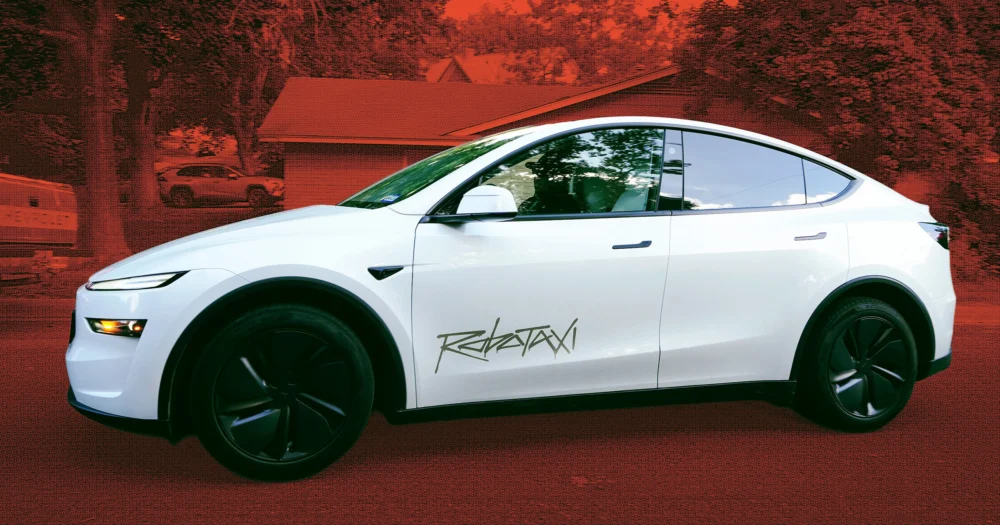
In a move that has become strikingly familiar to keen observers of the automotive and tech industries, Tesla CEO Elon Musk appears to have once again orchestrated a dramatic announcement, only to see its ambitious claims quietly recede into a more conventional reality. The much-hyped launch of Tesla’s “unsupervised” Robotaxi service in Austin, Texas, which promised a groundbreaking leap in autonomous driving, has seemingly been put on hold, with human safety monitors reportedly back inside the vehicles after a brief and contentious period of alleged driverless operation. This latest development underscores a recurring pattern of exaggerated promises and subsequent retreats that has characterized Tesla’s autonomous driving journey, often leaving both fervent fans and skeptical investors questioning the true capabilities of its Full Self-Driving (FSD) technology.
The initial fanfare surrounding Musk’s announcement last week was immense. He declared that Tesla’s Robotaxi service would finally commence giving rides in Austin without a human “safety monitor” present in the car – a milestone he had previously guaranteed would be achieved “since day one” of the service’s existence. This declaration was presented as the culmination of years of development and a validation of Tesla’s advanced AI and sensor suite. However, the excitement was short-lived, quickly giving way to a revelation that exposed a significant semantic sleight of hand. It soon became apparent that while no human was seated *inside* the Robotaxi, the “unsupervised” designation was misleading. Instead, human supervisors were merely relocated to another car that meticulously followed the robotaxi, acting as a discreet, yet ever-present, safety net. This workaround was widely criticized as being as dishonest as it was impractical, failing to deliver on the true spirit of unsupervised, fully autonomous operation that Musk had so often championed.
Now, just days after this initial deception came to light, a new layer of complexity has emerged. Reports from the EV blog *Electrek*, corroborated by direct customer accounts, indicate that the brief experiment with even this modified form of “unsupervised” driving has ceased. Based on what customers of the service are reporting, it appears that, at this moment, none of the Robotaxi rides currently being offered by Tesla are truly “unsupervised.” The most compelling evidence comes from Tesla enthusiast David Moss, a figure who had previously gained notoriety for purportedly driving 10,000 miles on FSD v14 without requiring any human interventions. Driven by his dedication to the Tesla cause, Moss traveled to Austin specifically to experience an “unsupervised” Robotaxi ride. To his considerable disappointment, after undertaking a staggering 42 rides, every single one came equipped with a human safety monitor. Moss expressed his frustration on X, noting, “This was also my 5th ride in a row with the supervisor in the drivers seat,” highlighting a departure from the usual practice where a safety monitor, if present, typically occupies the front passenger seat. This suggests a more cautious, hands-on approach from Tesla, indicating a significant step back from even the previous, already compromised, definition of “unsupervised.”
To be fair, the pause in these semi-unsupervised operations coincides with a massive winter storm that impacted a significant portion of the country, including Austin, over the preceding Saturday. It is plausible that adverse weather conditions, which present formidable challenges even for advanced human drivers, would necessitate additional precautions for autonomous vehicles. The service has since resumed, but conspicuously, Tesla has not issued any public communication regarding potential changes in how the Robotaxis operate or why human supervisors have seemingly returned to in-car positions. This lack of transparency only fuels speculation and reinforces the perception of a company that is quick to announce triumphs but silent on setbacks.
The timing of the initial “unsupervised” launch raises pertinent questions. Why were these rides initiated just two days before a winter storm that meteorologists had widely predicted? *Electrek* implies a potential connection to Tesla’s corporate calendar, specifically the company’s obligation to report its fourth-quarter results from the previous year. These results, released on January 28, revealed a stark reality: profits for that quarter were down a staggering 61 percent compared to the same period the prior year. In the high-stakes world of quarterly earnings reports, a positive headline about a breakthrough in autonomous driving could have been strategically timed to mitigate negative investor reactions to the company’s financial performance. This wouldn’t be the first instance where Musk’s pronouncements around FSD have appeared to coincide with moments of market pressure or the need to generate positive sentiment. The recurrent narrative of a “classic Musk bait-and-switch” gains further traction when considering these circumstantial links.
Indeed, this latest incident fits squarely into a long-standing pattern of Elon Musk’s ambitious, often fantastical, predictions for Tesla’s autonomous capabilities. For years, Musk has made numerous outrageous promises regarding the Robotaxi service and the broader FSD program. He famously predicted that Tesla would have “a million robotaxis on the road” by 2020, generating substantial revenue for vehicle owners, and that full Level 5 autonomy, requiring no human intervention under any conditions, was just “around the corner.” These pronouncements, delivered with characteristic bravado, have consistently failed to materialize within their stated timelines. The current FSD Beta, while impressive in some controlled scenarios, still requires constant human supervision and remains a Level 2 driver assistance system, not truly autonomous. The gap between Musk’s visionary rhetoric and the ground truth of Tesla’s technology has become a chasm, eroding trust among some segments of the public and investor community.
Beyond the unfulfilled promises, the safety record and regulatory scrutiny surrounding Tesla’s autonomous features are also critical considerations. The self-driving cabs, even in their supervised or semi-supervised states, have been involved in numerous accidents and have been caught violating traffic laws. Such incidents, often captured and shared online, have drawn the attention of federal regulators, particularly the National Highway Traffic Safety Administration (NHTSA). NHTSA has launched multiple investigations into Tesla’s Autopilot and FSD systems, citing concerns over crashes involving emergency vehicles and the system’s propensity for driver inattention. Public trust, which is paramount for the widespread adoption of autonomous vehicles, is fragile and easily undermined by reports of accidents, regulatory probes, and perceived dishonesty. Each setback, whether due to technical limitations or misleading marketing, further complicates the path to a driverless future for Tesla.
It is also instructive to place Tesla’s challenges within the broader context of the autonomous vehicle industry. Competitors such as Waymo (Alphabet’s self-driving unit) and Cruise (GM’s autonomous vehicle division) have also encountered significant hurdles, demonstrating the immense technical and logistical complexity of achieving true Level 4 or Level 5 autonomy. Waymo operates fully driverless services in Phoenix and San Francisco, but within strictly geofenced areas and after extensive, cautious testing with human safety drivers for years. Cruise, too, had launched driverless services in San Francisco but faced a major setback and suspension of its operations after a highly publicized incident involving a pedestrian, leading to significant regulatory backlash. These examples highlight that even companies employing different approaches, often with more conservative testing and deployment strategies, grapple with the profound challenges of real-world autonomous operation. Tesla’s strategy, often perceived as relying on its customers as beta testers for its FSD Beta, stands in contrast to these more contained and meticulously validated deployments, making its claims of rapid, unsupervised Robotaxi deployment seem even more ambitious, and ultimately, less credible.
In conclusion, the quiet pause in Tesla’s “unsupervised” Robotaxi rides serves as another stark reminder of the recurring cycle of hype and disappointment that has come to define Elon Musk’s pronouncements on autonomous technology. The initial claim of driverless operation, swiftly exposed as merely shifting human oversight to a following vehicle, and now seemingly rolled back to in-car supervision, paints a picture of a company struggling to meet its own ambitious deadlines and rhetoric. Whether the winter storm provided a convenient excuse or a genuine technical necessity, the lack of transparency surrounding the change further erodes confidence. The Robotaxi service, like the broader FSD initiative, continues to fall short of Musk’s myriad outrageous promises, plagued by accidents, regulatory scrutiny, and a persistent inability to deliver on its advertised capabilities. As Tesla prepares for its next quarterly earnings call and future product launches, the credibility of its autonomous ambitions will increasingly be scrutinized against the backdrop of these repeated “bait-and-switch” maneuvers, suggesting that true Level 4/5 autonomy remains a distant, perhaps even elusive, goal for the automaker, despite its CEO’s unwavering optimism.