Faris Adani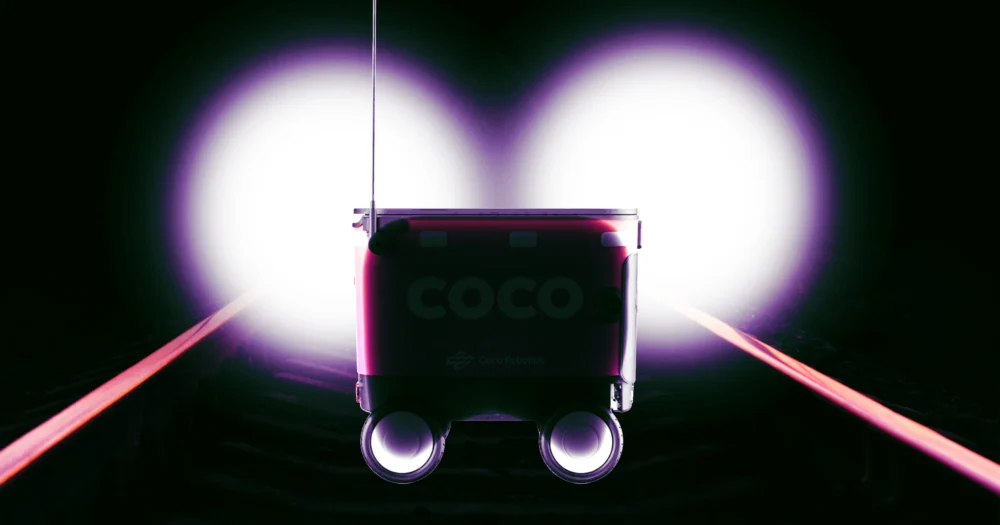
In a stark and somewhat morbid illustration of the ongoing challenges faced by autonomous vehicles in navigating complex urban environments, a Coco Robotics delivery bot met an untimely and spectacular end on January 15 in Miami. The diminutive, self-driving machine found itself inexplicably stalled on a stretch of Brightline train tracks, remaining motionless for an agonizing fifteen minutes before being utterly annihilated by an oncoming locomotive. The incident, captured on video by an astonished bystander, serves as a vivid reminder of the fine line between technological promise and the harsh realities of implementation, particularly when confronted with the unforgiving power of a freight train.
The fateful encounter unfolded in broad daylight, a surreal scene that quickly garnered significant attention online. Guillermo Dapelo, the onlooker who filmed the dramatic collision, recounted the events to People magazine, describing how the delivery bot had been marooned on the tracks for a considerable duration. Despite the unmistakable and increasingly insistent blare of the train’s horn, the robot remained stubbornly stationary, making no discernible attempt to remove itself from the path of the colossal locomotive. "Oh it’s gonna crush it!" Dapelo can be heard exclaiming in the footage, moments before the Brightline train plowed into the hapless bot. The impact was instantaneous and devastating, reducing the machine to a shower of sparks and fragments beneath the train’s wheels before the video abruptly cut out, leaving little doubt about the robot’s complete and total destruction.
Dapelo’s account painted a picture of a situation spiraling out of control despite attempts to intervene. He mentioned that a nearby Uber Eats driver, witnessing the robot’s predicament, had contacted Coco Robotics to alert them to its perilous location. This detail raises critical questions about the efficacy of remote monitoring and intervention protocols for autonomous delivery fleets. If human operators were aware of the robot’s hazardous position for a quarter of an hour, why was no action taken to either remotely move it or dispatch personnel to the scene? The gap between awareness and resolution highlights a potential vulnerability in the operational framework of these burgeoning delivery services.
Coco Robotics, through its vice president Carl Hansen, attributed the mishap to a "rare hardware failure," labeling it an "extremely rare occurrence." Hansen emphasized the company’s commitment to safety, stating, "Safety is always our top priority, which is why our robots operate at pedestrian speeds, yield to people, and are monitored in real time by human safety pilots." He further highlighted Coco’s operational track record in Miami, asserting that the company had been active for over a year, traversing thousands of miles without significant incidents, including successfully crossing those same train tracks multiple times daily. A spokesperson for Coco also confirmed that the robot was not actively making a delivery at the time of the incident, suggesting it might have been en route for maintenance or repositioning, or perhaps simply idled between tasks.
While the company’s assurances are understandable in the face of negative publicity, the incident undeniably casts a shadow over the "rare hardware failure" explanation. A hardware failure that renders a robot completely immobile and unresponsive to both auditory warnings and remote human intervention for fifteen minutes on active train tracks points to a severe systemic flaw, rather than a mere glitch. It compels a deeper examination of redundancy measures, fail-safe mechanisms, and the robustness of the "human safety pilot" oversight. Are these pilots truly capable of taking over in real-time under such critical circumstances, or are there latency issues, communication breakdowns, or limitations in remote control capabilities that prevent timely intervention?
This unfortunate event is not an isolated one, but rather another entry in a growing catalogue of incidents involving autonomous delivery robots and, more broadly, self-driving vehicles. These small, often endearing machines, designed for "last-mile" delivery, have proven capable of causing their fair share of urban mayhem. Instances range from minor inconveniences like disrupting traffic flow to more serious collisions. One notable case involved a delivery bot being struck by a Waymo robotaxi after it stalled at the end of a crosswalk, forcing the larger autonomous vehicle to slam on its brakes. Other bots have been observed dinging parked cars, blowing through active crime scenes, or simply creating unexpected obstacles in pedestrian zones.
The human element, too, has frequently been a point of friction. Delivery bots have had controversial run-ins with pedestrians, generating resentment and safety concerns among locals. One particularly unsettling incident involved a woman being knocked to the ground by a Starship delivery bot (a competitor to Coco) that unexpectedly reversed into her, leaving her with back pain and a gash on her arm. Last year, another widely circulated video showed a delivery robot seemingly "tormenting" a man using a mobility scooter, repeatedly brake-checking him and cutting him off as he attempted to navigate around it on a sidewalk. Such encounters highlight the limitations of current sensor technology and AI decision-making in accurately perceiving and predicting complex human behavior, especially in crowded or unpredictable environments. The "pedestrian speeds" touted by Coco, while slower than cars, can still generate significant force or create dangerous tripping hazards when coupled with unexpected movements.
The challenges are not confined to the smaller delivery bots. Their larger, more sophisticated self-driving car cousins have also demonstrated alarming vulnerabilities, particularly when interacting with trains. Numerous reports have documented Teslas operating in "Full Self-Driving" (FSD) mode driving directly into the path of oncoming locomotives, prompting a federal investigation into the automaker by the National Highway Traffic Safety Administration (NHTSA). Just earlier this month, a passenger was compelled to bail out of a Waymo robotaxi after the vehicle inexplicably decided to drive along light rail tracks, mimicking a railcar in a truly bizarre and dangerous display of navigational confusion. These incidents, whether involving a small delivery bot or a full-sized autonomous car, underscore a critical weakness in current autonomous systems: the consistent and reliable detection, interpretation, and avoidance of trains and train tracks. The sheer mass, speed, and fixed trajectory of a train present an absolute hazard that autonomous systems, for all their advancements, still seem to struggle with in certain edge cases.
Technologically, the "rare hardware failure" could encompass a range of issues. It might be a sensor malfunction (LiDAR, camera, radar) failing to detect the tracks or the approaching train, or misinterpreting the environment. It could be a failure in the navigation system, causing the robot to incorrectly identify its position or path. A power failure, a motor seizure, or a communication module breakdown could also be responsible, severing its link to remote operators. The fact that the robot was stuck for 15 minutes suggests either a complete system lock-up or a critical communication failure that prevented human intervention. The "human safety pilots" are a crucial layer of oversight, but their effectiveness is contingent on real-time data, reliable connectivity, and the ability to remotely override or guide the robot, all of which seem to have been compromised in this instance.
The public perception of autonomous technology is heavily influenced by such incidents. While companies like Coco Robotics champion the convenience and efficiency of automated delivery, each failure, especially one as dramatic and unequivocal as this, chips away at public trust. For many, these robots are still novelties, but when they become obstructions, hazards, or victims of their own technological limitations, the narrative shifts from innovation to incompetence or danger. This directly impacts the regulatory landscape, with cities and states grappling with how to permit, monitor, and govern these burgeoning fleets. Stricter safety standards, more rigorous testing, and clearer accountability frameworks may become inevitable as the number of autonomous vehicles on our streets continues to grow.
In conclusion, the spectacular demise of the Coco delivery robot on the Miami train tracks serves as a multi-layered cautionary tale. It highlights the complex interplay of hardware robustness, software intelligence, human oversight, and environmental variables that define the frontier of autonomous technology. While the promise of automated delivery remains compelling, this incident underscores the profound need for absolute reliability and infallible safety protocols, particularly when dealing with environments as unforgiving as active train lines. Perhaps, as the article humorously suggests, the takeaway is indeed obvious: until autonomous systems can reliably overcome their apparent "suicidal impulse" around train tracks, we might need to consider bringing back those old-school cowcatchers—not for cows, but for the unfortunate robots that haven’t quite mastered the art of self-preservation. The road to fully autonomous urban navigation is clearly still fraught with unexpected, and sometimes explosive, detours.