Faris Adani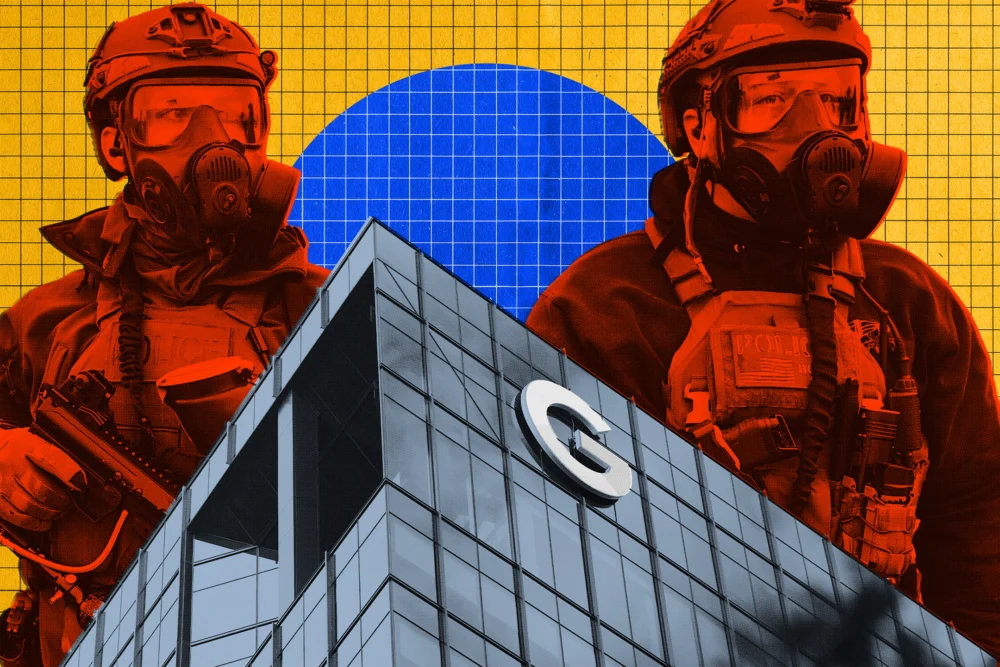
The corporate campuses of Silicon Valley, often envisioned as bastions of innovation and employee-centric design, are increasingly becoming unexpected battlegrounds in the contentious national debate over immigration enforcement. A recent bombshell report from Wired has unveiled a harrowing incident from the fall of 2025, where a federal agent from Immigration and Customs Enforcement (ICE) attempted to force entry into a Google office in Cambridge, Massachusetts, without a warrant. This revelation, which surfaced in the deeply unsettling aftermath of the fatal shooting of Minneapolis nurse Alex Pretti by ICE officers in early 2026, has sent shockwaves through Google’s workforce, igniting widespread fear and urgent demands for greater protection from their employer. While employees at some tech corporations like Palantir and Amazon have been actively demanding their executives cancel lucrative government contracts on principle, Google staffers are now confronting a more immediate and visceral threat: the potential for government agents to breach the sanctuary of their workplaces and target them directly.
The incident in Cambridge, previously undisclosed to the wider public, came to light during an internal discussion following the Pretti killing, as Google employees pressed senior leadership on what measures were in place to safeguard them. According to the company’s head of security and risk operations, an ICE officer "arrived at reception without notice," seeking unauthorized access to the facility. Crucially, the agent was "not granted entry because they did not have a warrant, and promptly left." This successful denial of entry, while a testament to Google’s security protocols, did little to quell the rising tide of anxiety among staff. The fact that a federal agency felt emboldened to attempt such an intrusion into a private tech campus, even if unsuccessful, underscored the escalating tensions and the perceived overreach of ICE’s mandate. The attempted raid, occurring in the autumn of 2025, served as a chilling precursor to the heightened enforcement activities that would dominate headlines in early 2026, creating an atmosphere of palpable unease within Google’s usually insulated corporate environment.
The catalyst for this renewed internal scrutiny and outward protest was the tragic death of Alex Pretti, a Minneapolis nurse whose fatal encounter with six Immigration and Customs Enforcement officers quickly became a national flashpoint. Details emerging from the incident painted a grim picture: Pretti was reportedly using his cell phone camera to record the officers during an interaction, an act that allegedly led to an unnecessary escalation of force. Eyewitness accounts and a harrowing video that subsequently circulated online depicted a defenseless citizen being subjected to excessive violence, culminating in his death. This egregious event, widely condemned as an execution by federal agents, galvanized activists and sparked a fresh wave of outrage against ICE. For Google employees, many of whom are immigrants, children of immigrants, or advocates for civil liberties, Pretti’s killing was not just another news story; it was a stark, terrifying reminder of the potential for federal agents to wield deadly force and disregard due process, even against U.S. citizens. The incident immediately amplified fears that similar tactics could be employed against them or their colleagues, even within the confines of their workplace.
The fears among Google’s employees are multifaceted and deeply personal. Beyond the immediate physical safety concern, there is a profound anxiety about privacy, surveillance, and the erosion of trust in an employer that prides itself on its progressive image. The prospect of ICE agents attempting to enter their office without a warrant suggests that employees could be targeted based on their immigration status, perceived political affiliations, or even simply for being in the wrong place at the wrong time. This is particularly alarming in a company with a diverse, international workforce, where many employees may have family members or friends who are undocumented or have uncertain immigration statuses. The psychological toll of working under the constant shadow of potential raids or surveillance can be immense, impacting productivity, morale, and overall well-being. Unlike the proactive stance taken by workers at other tech companies who are challenging their executives on ethical grounds regarding government contracts, Google’s employees are now primarily seeking protection from government agencies, a stark and unsettling shift in the nature of their advocacy.
The responses from Google’s senior leadership to these mounting internal concerns have been notably divergent, revealing a potential rift within the company’s highest echelons. On one hand, CEO Sundar Pichai and DeepMind CEO Demis Hassabis have maintained a conspicuous silence on both the Pretti killing and the Cambridge incident. This tight-lipped approach, while perhaps strategically calculated to avoid political entanglement or legal ramifications, has been met with growing frustration and disappointment from employees. Many interpret their silence as a lack of empathy or, worse, an tacit acceptance of the government’s aggressive tactics. In an era where corporate leaders are increasingly expected to take a stand on social and ethical issues, particularly those directly impacting their workforce, Pichai and Hassabis’s reticence risks alienating a significant portion of their talent base and eroding the company’s reputation as a socially responsible innovator.
In stark contrast, DeepMind’s Chief Scientist, Jeff Dean, has taken a "pointedly vocal stand," emerging as a powerful voice of dissent and moral clarity within the company. In response to the video footage of Pretti’s killing, Dean posted a scathing condemnation, writing, "This is absolutely shameful." He continued, "Agents of a federal agency unnecessarily escalating, and then executing a defenseless citizen whose offense appears to be using his cell phone camera. Every person regardless of political affiliation should be denouncing this." Dean’s unequivocal denunciation, coming from such a high-ranking and respected figure within Google, carries significant weight. It validates the employees’ fears, provides a moral compass for the company, and signals that not all leaders are willing to remain silent in the face of perceived injustice. His outspokenness highlights the internal pressure Google’s leadership is facing, demonstrating that the demand for ethical responsibility is not confined to entry-level staff but resonates deeply within its scientific and technical leadership.
The incidents at Google and the tragic death of Alex Pretti are not isolated events but rather symptoms of a broader, escalating crisis surrounding ICE’s mandate and its operational tactics. Formed in 2003 in the aftermath of the 9/11 attacks, ICE’s original mission was to enforce immigration laws and protect national security. However, over the past two decades, its scope and methods have come under intense scrutiny, with numerous reports documenting instances of excessive force, human rights abuses, and a systematic disregard for due process, targeting both non-citizens and U.S. citizens alike. The year 2025 alone saw a grim timeline of deaths in ICE custody or during operations, as detailed by The Guardian, underscoring a pattern of aggressive enforcement with fatal consequences. Another high-profile case from January 2026 involved the killing of Keith Porter Jr., a U.S. citizen, by ICE agents in circumstances that also raised serious questions about the necessity and proportionality of force used. These incidents fuel the increasingly urgent calls to defund or even abolish the agency, arguing that its current structure and culture are fundamentally incompatible with democratic values and human rights.
The tech industry, often lauded for its progressive ideals and disruptive innovation, finds itself at a critical moral crossroads. The ethical implications of providing technology and services to government agencies, particularly those with controversial human rights records like ICE, are becoming impossible to ignore. The "iceout.tech" movement, an open letter signed by over 800 tech workers, explicitly calls on companies to sever ties with ICE. At the time of writing, more than 100 signatories referenced Google or its parent company, Alphabet, in their signatures, indicating a significant internal demand for change. These tech workers argue that their companies’ advanced capabilities, whether in data analytics, cloud computing, or facial recognition, can be weaponized to facilitate surveillance, detention, and deportation, thereby making them complicit in human rights abuses. The intensifying nationwide anti-ICE protests further amplify these calls, transforming what might have once been considered internal corporate policy debates into matters of public ethics and social justice.
In this charged atmosphere, silence from tech giants like Google is no longer a viable option. The attempted entry into their Cambridge office, coupled with the tragic death of Alex Pretti and the broader narrative of ICE overreach, has created an untenable position for the company. Google, like many of its peers, prides itself on fostering an open, innovative, and inclusive culture. However, the fear now gripping its employees threatens to undermine these foundational values. The company’s leadership faces immense pressure to not only protect its workforce from potential government coercion but also to publicly articulate its stance on an issue that has become a defining moral challenge of the era. Failure to adequately address these concerns could have far-reaching consequences, impacting employee morale, talent retention, and Google’s reputation as a responsible global corporation. As anti-ICE sentiments continue to swell, both within the tech sector and across the nation, the onus is on Google and its leaders to demonstrate a commitment to ethical leadership that extends beyond technological advancement to encompass fundamental human rights and the safety of its own people.