isnaini azizah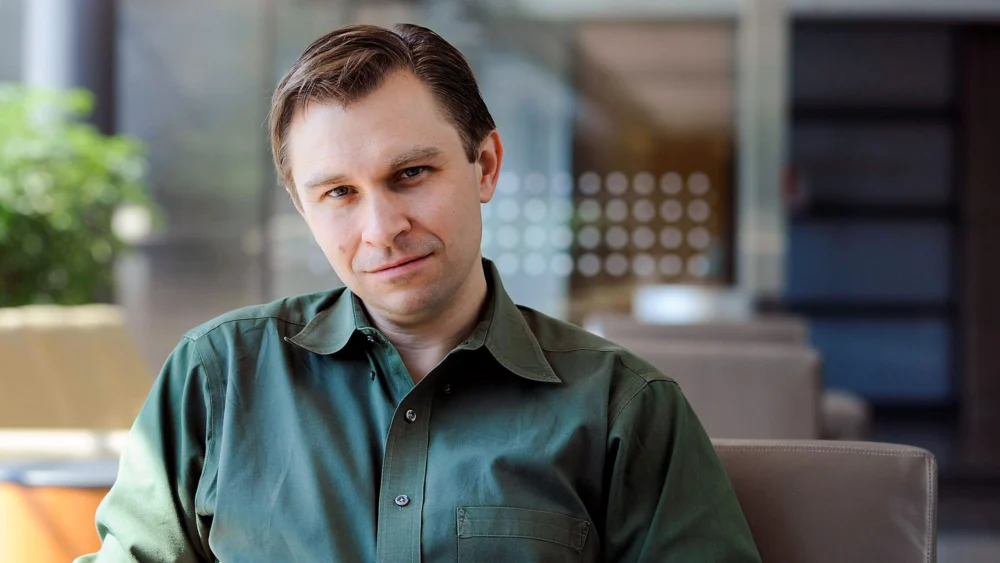
This groundbreaking trial will explore a radical rejuvenation concept known as "reprogramming," which has rapidly garnered substantial investment, exceeding hundreds of millions of dollars, from major Silicon Valley firms such as Altos Labs, New Limit, and Retro Biosciences. These companies, backed by prominent tech titans, are all exploring the potential of reprogramming cells to a younger state. The fundamental principle of reprogramming involves resetting the epigenetic controls within cells – essentially, the switches that dictate which genes are active and which are silenced. This mechanism is often described by investors as the "AI of the bio world" due to its pervasive influence and significant funding.
Karl Pfleger, an investor in the UK startup Shift Bioscience, notes the immense financial backing for reprogramming technologies, highlighting that Sinclair’s company, Life Biosciences, has been actively seeking further funding to advance its treatment. While the power of reprogramming is undeniable, it also presents inherent risks. In laboratory animals, it has been known to cause cancer. However, the specific version of the technique developed by Life Biosciences has demonstrated promising safety in preclinical animal studies.
The initial human trial will be a complex undertaking, involving approximately a dozen patients diagnosed with glaucoma, a condition characterized by optic nerve damage due to elevated intraocular pressure. The treatment involves injecting viruses carrying three potent reprogramming genes directly into one eye of each participant. This innovative approach aims to restore the cells in the affected eye to a healthier, more youthful state. The study protocol, first published in December, details the controlled administration of these reprogramming agents.
To mitigate the risk of over-reprogramming, the therapeutic genes are designed to be tightly regulated. They are activated only when the patient is taking a low dose of the antibiotic doxycycline. This controlled exposure, initially planned for about two months, will allow for close monitoring of the treatment’s effects. Company executives have expressed optimism for months, characterizing this trial as a potential harbinger of a new era in age reversal. Michael Ringel, Chief Operating Officer at Life Biosciences, stated at a recent event that this trial represents a "tremendously big deal for us as an industry" and "the first time in human history, in the millennia of human history, of looking for something that rejuvenates."
The scientific foundation for this approach is rooted in the Nobel Prize-winning discovery made two decades ago: that introducing specific potent genes into a cell can revert it to a pluripotent stem cell state, akin to those found in early embryos. These genes, famously known as Yamanaka factors, are metaphorically described as a "factory reset" button for cells. However, their potency also poses a significant danger, as uncontrolled activation in living organisms can lead to uncontrolled cell growth and tumor formation.
This inherent risk spurred the development of "partial" or "transient" reprogramming strategies. The objective is to limit the exposure to these powerful genes, or to utilize a select subset, with the goal of making cells function as if they were younger without completely erasing their specialized identity. In 2020, David Sinclair published research on the cover of the prestigious journal Nature, claiming that such partial reprogramming could restore vision in mice with damaged optic nerves, even suggesting evidence of nerve regeneration. The article’s headline, "Turning Back Time," underscored the revolutionary potential of this work.
While not all scientists universally accept that reprogramming definitively constitutes "age reversal," Sinclair remains a staunch proponent of this theory. He posits that the progressive erosion of accurate epigenetic information within our cells is the fundamental cause of aging – a notion that aligns with Elon Musk’s earlier musings on the "obvious" nature of aging’s underlying mechanism. Sinclair expressed in an email that Musk "does seem to be paying attention to the field and [is] seemingly in sync with [my theory]."
Reprogramming is not the first longevity intervention championed by Sinclair, who has authored best-selling books and commands significant fees for his lectures on longevity. Previously, he advocated for the anti-aging benefits of molecules such as sirtuins and resveratrol, a compound found in red wine. However, some critics have accused him of overstating scientific progress, a sentiment echoed in a recent Wall Street Journal article that labeled him a "reverse-aging guru" whose companies have reportedly "not panned out."
Life Biosciences itself has faced its share of challenges. Established in 2017, the company initially pursued a strategy of launching independent subsidiaries, each focused on a specific aspect of aging. When these ventures yielded limited success, a new CEO, Jerry McLaughlin, was appointed in 2021. He has since redirected the company’s efforts toward replicating Sinclair’s mouse vision experiments and advancing towards human trials.
The company has also explored the potential of reprogramming other organs, including the brain, and executives like Ringel entertain the long-term possibility of whole-body rejuvenation. However, for the present, the current study is best understood as a proof of concept, a significant step but still a considerable distance from a true "fountain of youth." Investor Karl Pfleger offers a pragmatic outlook, stating, "The optimistic case is this solves some blindness for certain people and catalyzes work in other indications. It’s not like your doctor will be writing a prescription for a pill that will rejuvenate you."
A key element of Life Biosciences’ treatment is its reliance on an antibiotic-controlled switching mechanism. While commonly used in laboratory animals, this system has not been previously employed in human trials. The genetic components of this switch, derived from E. coli and the herpes virus, raise concerns among scientists about the potential for adverse immune reactions in humans. Noah Davidsohn, who was instrumental in developing the technique with Sinclair and is now Chief Scientist at Rejuvenate Bio, noted, "I was always thinking that for widespread use you might need a different system." Furthermore, Life Biosciences’ selection of three reprogramming factors, known by the acronym OSK, may also present risks. These factors are expected to activate hundreds of other genes, and in certain contexts, their combined effect could cause cells to revert to a highly primitive, stem-cell-like state.
Other companies in the reprogramming space are focusing their research on identifying the optimal genes for achieving age reversal without undesirable side effects. New Limit, for instance, is conducting an extensive gene discovery program and anticipates it will take another two years before they are ready for human studies. Shift Bioscience is currently in the early stages of animal experimentation. Daniel Ives, CEO of Shift, offers his perspective on Life Biosciences’ approach: "Are their factors the best version of rejuvenation? We don’t think they are. I think they are working with what they’ve got. But I think they’re way ahead of anybody else in terms of getting into humans. They have found a route forward in the eye, which is a nice self-contained system. If it goes wrong, you’ve still got one left." This final comment highlights the strategic advantage of targeting the eye, a relatively isolated and manageable system for initial human testing.