Faris Adani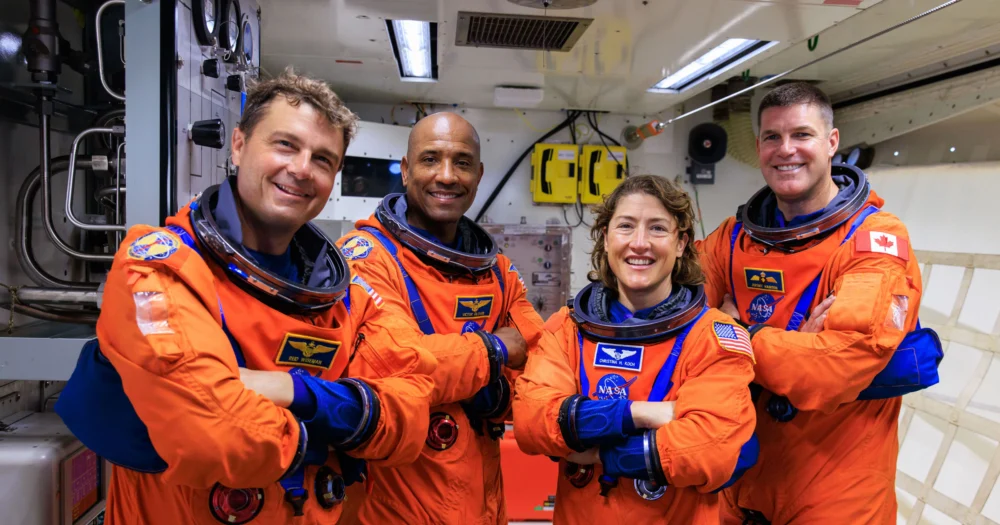
The countdown to humanity’s momentous return to the Moon has officially begun, as the four pioneering astronauts of NASA’s Artemis II mission entered quarantine this past Friday, signaling the final critical phase of preparations for their epic journey. This health stabilization program is a standard, yet vital, precaution ahead of any deep-space endeavor, meticulously designed to safeguard the crew from illness and ensure the mission proceeds without preventable delays. As NASA meticulously explained, this period aims to "ensure that they don’t pick up any illness that could delay their mission by limiting their exposure to others in the days before they lift off." This protective measure, typically commencing approximately 14 days before launch, preserves essential flexibility as mission teams work towards the potential launch opportunities in the upcoming February window.
The Artemis II mission stands as a colossal leap forward in human space exploration, poised to send a crew of four astronauts farther from Earth than any human has ever ventured before. Their mission will involve a complex lunar flyby, bringing them within a mere 4,600 miles of the Moon’s far side, offering unprecedented views and critical data, before embarking on their four-day return journey home. This mission is not merely a revisit; it is a foundational step in establishing a sustainable human presence on and around the Moon, paving the way for future lunar landings and ultimately, human missions to Mars.
The crew, a diverse and highly accomplished group, comprises NASA astronauts Reid Wiseman, Victor Glover, Christina Koch, and Canadian Space Agency (CSA) astronaut Jeremy Hansen. Commander Reid Wiseman, a seasoned veteran of the International Space Station (ISS), will lead the mission. Pilot Victor Glover, also an ISS veteran, holds the distinction of being the first African American to complete a long-duration mission on the ISS. Mission Specialist Christina Koch is an experienced engineer and astronaut, known for holding the record for the longest single spaceflight by a woman. Rounding out the crew is Jeremy Hansen, the first Canadian to be assigned to a lunar mission, highlighting the international collaboration inherent in the Artemis program. Their collective experience and diverse backgrounds underscore the global ambition behind this endeavor.
The health stabilization program, a legacy practice from the Apollo era, is paramount for crew well-being and mission success. While in quarantine, the astronauts adhere to stringent guidelines: avoiding public places, consistently wearing masks, and maintaining physical distance from others. However, unlike some more restrictive quarantines, they are still permitted contact with friends and family, provided these loved ones also observe the same strict health protocols. This balance ensures the crew’s mental well-being while rigorously protecting their physical health, recognizing the immense psychological and physical demands of space travel.
Ahead of the crew’s launch, NASA is conducting a crucial wet dress rehearsal (WDR) at Kennedy Space Center’s historic Launch Complex 39B. This comprehensive simulation, scheduled as early as January 31, involves fully fueling the Space Launch System (SLS) rocket and running through the entire countdown sequence, stopping just before engine ignition. The WDR is an invaluable exercise, allowing engineers to verify all systems, procedures, and ground support equipment are operating flawlessly, identifying and resolving any potential issues before the actual launch. This meticulous testing ensures the integrity and safety of the most powerful rocket ever built for human spaceflight.
The Space Launch System (SLS) rocket, a marvel of modern engineering, stands at the heart of the Artemis program. Towering at 322 feet, the Block 1 configuration for Artemis II is designed to generate 8.8 million pounds of thrust at liftoff, propelling the Orion spacecraft and its crew towards the Moon. The SLS comprises a core stage powered by four RS-25 engines (derived from the Space Shuttle program) and two solid rocket boosters (SRBs), providing the initial immense thrust. Above the core stage sits the Interim Cryogenic Propulsion Stage (ICPS), which will perform the critical translunar injection burn, sending Orion on its trajectory to the Moon. The Orion spacecraft itself is a sophisticated deep-space exploration vehicle, designed to sustain a crew for extended missions beyond low Earth orbit. It consists of a crew module, where the astronauts live and work, and a European Service Module (ESM), which provides propulsion, power, water, oxygen, and thermal control. Orion’s advanced heat shield is designed to withstand the extreme temperatures of Earth re-entry at lunar return velocities, a critical technology test for Artemis II.
If all systems prove "go" following the WDR and final checks, the Space Launch System rocket, already rolled out to Launch Complex-39B alongside the Orion spacecraft, could launch as early as February 6. However, an official launch date will be announced only after all pre-launch reviews and weather assessments are complete. The flexibility in the launch window is a testament to NASA’s commitment to safety and mission readiness over rigid deadlines.
This mission marks a profound moment, representing the first time humans have ventured to the Moon in over half a century. The last time humans walked on the lunar surface was during Apollo 17 in December 1972, with astronauts Gene Cernan and Harrison Schmitt. The Artemis program, unlike its Apollo predecessor, aims for a sustainable presence, envisioning future lunar bases, commercial partnerships, and a permanent human foothold on and around the Moon. This "return to the Moon" is therefore not a nostalgic revisit but a strategic stepping stone for future deep-space exploration.
NASA Administrator Bill Nelson has eloquently articulated the significance of this mission: "Artemis II will be a momentous step forward for human spaceflight. This historic mission will send humans farther from Earth than ever before and deliver the insights needed for us to return to the Moon – all with America at the helm, in collaboration with our international partners." This sentiment underscores the program’s dual goals of pushing the boundaries of human exploration and fostering international cooperation in space.
The data gathered during Artemis II will be invaluable for the subsequent Artemis III mission, which aims to land the first astronauts on the lunar surface since Apollo 17. Artemis III is scheduled to launch sometime next year, but critical decisions remain, such as the selection of the Human Landing System (HLS) that will transport the crew from lunar orbit to the surface. SpaceX’s Starship is currently contracted for this role, but its development and testing continue, highlighting the complex interplay between traditional space agencies and commercial partners in modern space exploration. Challenges, such as the rigorous testing and validation of new spacecraft and systems, are inherent in such ambitious endeavors. For instance, the Orion spacecraft’s heat shield performance during re-entry at lunar velocities is a critical test point, with experts meticulously scrutinizing its design and construction to ensure crew safety.
The Artemis II mission is more than just a test flight; it’s a testament to human ingenuity, perseverance, and our enduring desire to explore. It reconnects humanity with its lunar aspirations, inspiring a new generation to look up and dream of the stars. The journey of Reid Wiseman, Victor Glover, Christina Koch, and Jeremy Hansen will not only etch their names into the annals of space history but will also lay the groundwork for a future where humanity lives and works beyond Earth, venturing ever deeper into the cosmos. Their time in quarantine is a quiet prelude to a loud and spectacular leap forward for all humankind.