isnaini azizah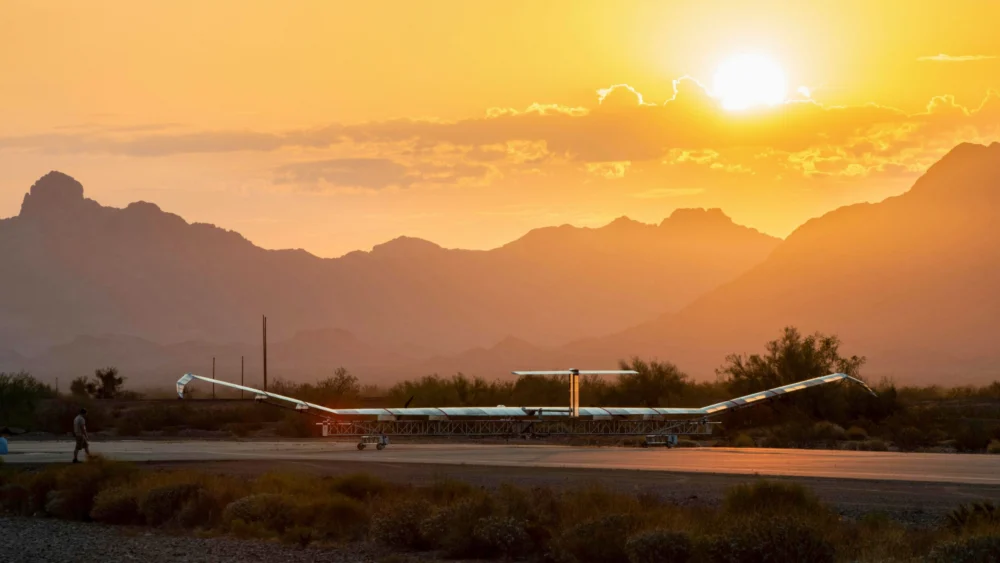
Google’s ambitious Loon project, launched in 2011 with high-altitude balloons, aimed to address this very issue by providing internet access from the stratosphere. However, the project ultimately proved economically unfeasible due to the inherent drift of balloons, requiring constant replenishment and making sustained coverage challenging. Despite Google shuttering Loon in 2021, the underlying technology and concept of HAPS have continued to evolve behind the scenes. Today, several companies are claiming to have overcome the limitations that plagued Loon, developing more controllable airships and fixed-wing Unmanned Aerial Vehicles (UAVs). These entities are now gearing up for significant tests, particularly over Japan and Indonesia, to demonstrate the internet-beaming capabilities of their advanced HAPS designs within this year.
The regulatory landscape is also showing increased receptiveness to HAPS. In a significant move in mid-December, the US Federal Aviation Administration released a comprehensive 50-page document detailing strategies for integrating large numbers of HAPS into American airspace. This aligns with ongoing efforts to address domestic connectivity gaps; according to the US Census Bureau’s 2024 American Community Survey (ACS) data, approximately 8 million US households, representing 4.5% of the population, remain completely offline. Proponents of HAPS technology believe it could offer a more economical pathway to connect these underserved populations compared to traditional infrastructure development.
Despite this burgeoning optimism, some industry analysts express a degree of caution. Dallas Kasaboski, a space industry analyst at Analysis Mason, notes the historically slow and challenging development of the HAPS market. He points to past ambitious ventures that ultimately failed to materialize, highlighting the inherent difficulties in realizing such innovative solutions.
Beaming Down Connections from the Stratosphere
Operating at altitudes exceeding 12 miles, HAPS possess a unique aerial advantage. From this vantage point, they can efficiently beam low-latency, high-speed internet connectivity directly to smartphone users in areas that are either too remote or too sparsely populated to justify the substantial investment required for laying fiber-optic cables or constructing ground-based cellular base stations. Pierre-Antoine Aubourg, Chief Technology Officer of Aalto HAPS, a spin-off from European aerospace manufacturer Airbus, explains that while mobile network operators have a commitment to provide coverage, they often find it more financially expedient to pay penalties rather than extend services to these remote regions. HAPS, he argues, fundamentally alters this economic equation, making remote connectivity profitable.
Aalto HAPS has developed a solar-powered UAV, codenamed Zephyr, boasting a 25-meter wingspan. This aircraft has successfully completed numerous long-duration test flights in recent years, setting a HAPS record in April 2025 by remaining airborne for 67 consecutive days. The early months of 2026 are slated to be particularly active for Aalto HAPS, with Aubourg confirming that Zephyr will undertake a test run over southern Japan. This trial aims to deliver connectivity to residents of some of the country’s most isolated and poorly connected inhabited islands.
Japan, with its unique geography of approximately 430 inhabited islands that are often remote, mountainous, and sparsely populated, presents an ideal testing ground for HAPS technology. Traditional terrestrial cell towers are prohibitively expensive to deploy in such challenging terrains. Aalto HAPS is collaborating with Japan’s leading mobile network operators, NTT DOCOMO and the telecom satellite operator Space Compass, who intend to integrate Zephyr into their next-generation telecommunications infrastructure. Shigehiro Hori, co-CEO of Space Compass, emphasized the transformative potential of non-terrestrial networks for Japan’s communications ecosystem, citing their ability to improve access in hard-to-reach areas and bolster emergency response capabilities.
Aubourg further elaborates that Zephyr will function as an extension of the NTT DOCOMO network, effectively acting as a high-altitude cell tower. Crucially, it will transmit high-speed 5G connectivity directly to smartphones without requiring the specialized terminals typically needed for satellite internet reception. For the end-user, the transition from terrestrial to HAPS network connectivity will be seamless, operating on the same frequencies and within the same network.
Joining the race, New Mexico-based Sceye is also preparing for pre-commercial trials of its stratospheric connectivity service in Japan this year. Sceye has developed a solar-powered helium-filled airship and conducted extensive testing of its 65-meter-long vehicle throughout 2025. The company is partnering with Japanese telecommunications giant SoftBank, which, much like NTT DOCOMO, sees HAPS as a pivotal technology for advancing its network capabilities.

Mikkel Frandsen, Sceye’s founder and CEO, attributes his company’s progress to leveraging the advantages of a more controllable airship design, advanced avionics, and innovative battery technology that powers an electric fan to maintain station. He contrasts this with Google’s Loon, which, despite sophisticated algorithms and altitude adjustment capabilities, relied heavily on favorable winds for station-keeping, leading to unpredictable performance and necessitating a large number of balloons for reliable coverage, an unsustainable economic model. Sceye’s airship, Frandsen explains, can "point into the wind" and maintain its position more effectively. He highlights the significant surface area of their airship, providing ample space for solar panels and batteries, which enables continuous power through day-night cycles and ensures sustained station-keeping at altitude.
The Persistent Digital Divide
The current cost of satellite internet can be a significant barrier for individuals in developing countries. In Africa, for instance, Starlink subscriptions begin at approximately $10 per month, a substantial sum for millions who subsist on as little as $2 a day. Both Frandsen and Aubourg posit that HAPS can offer a more affordable solution for connecting the world’s unconnected populations. Unlike low-Earth-orbit satellites that move at high speeds and quickly disappear from a ground terminal’s view, requiring vast constellations for continuous coverage, HAPS can hover over a region, providing a constant connection. Furthermore, the fleet size of HAPS can be scaled to match demand more efficiently. Aubourg points out that delivering connectivity to a single location via a low-Earth-orbit constellation necessitates a complete constellation, whereas a single HAPS aircraft can serve one location, and the fleet size can be precisely tailored to the required market coverage.
Frandsen also identifies limitations with satellite internet, particularly the dilution of bandwidth as the number of users in an area increases. He cites Elon Musk’s analogy of Starlink beams being like a flashlight, covering a wide area. While this is acceptable with sparse user density, it becomes problematic in more populated areas. Ukrainian defense technologists have reported Starlink bandwidth dropping to as low as 10 megabits per second on the front lines during periods of heavy drone and ground robot usage, a significant reduction from its peak offering. Users in Indonesia have also reported similar bandwidth degradation issues as subscriber numbers grew. Frandsen asserts that Starlink’s performance becomes suboptimal when user density exceeds one person per square kilometer, a threshold that can be reached even in relatively isolated island communities. He emphasizes the direct correlation between altitude and the population that can be served, and that the stratosphere offers a more advantageous position for reaching rural populations than the vast distances of space.
Cheaper and Faster Connectivity on the Horizon
Sceye and Aalto HAPS envision their stratospheric vehicles as integral components of a unified telecom network, working in concert with terrestrial cell towers and satellites. However, they are not alone in this pursuit. World Mobile, a London-headquartered telecommunications company, believes its hydrogen-powered high-altitude UAV can directly compete with satellite mega-constellations. Having acquired HAPS developer Stratospheric Platforms last year, World Mobile plans to flight-test an innovative phased array antenna this year, which they claim will deliver 200 megabits per second bandwidth, capable of supporting ultra-HD video streaming to 500,000 users simultaneously over a 15,000 square kilometer area—equivalent to the coverage of over 500 terrestrial cell towers. The company has also partnered with Indonesian telecom operator Protelindo to construct a prototype Stratomast aircraft, with tests slated for late 2027. Richard Deakin, CEO of World Mobile’s HAPS division, estimates that just nine Stratomasts could provide high-speed internet connectivity to Scotland’s 5.5 million residents for approximately £40 million ($54 million) annually, translating to about 60 pence (80 cents) per person per month. This is significantly less than the estimated £75 ($100) per month for Starlink subscriptions in the UK.
A Troubled Past, a Promising Future?
Companies involved in HAPS also highlight the advantage of rapid deployment in disaster-stricken areas, a role Loon notably played after Hurricane Maria in Puerto Rico. Furthermore, HAPS could empower smaller nations to gain greater control over their internet-beaming infrastructure, reducing reliance on mega-constellations controlled by larger geopolitical powers, a significant consideration amid rising global tensions.
Despite these potential benefits, analysts remain reserved, projecting a modest HAPS market valuation of $1.9 billion by 2033. In contrast, the satellite internet industry is anticipated to reach $33.44 billion by 2030. The concept of using HAPS for internet delivery has been explored since the 1990s, a period concurrent with the development of low-Earth-orbit mega-constellations. However, the seemingly more cost-effective stratospheric technology lost ground to space-based fleets, partly due to falling launch costs and substantial investment from SpaceX. Google was not the sole tech giant to explore HAPS; Facebook’s Aquila project was also discontinued due to technical challenges. While the current generation of HAPS developers claims to have surmounted these past obstacles, Kasaboski cautions that they are entering a competitive landscape dominated by established internet-beaming mega-constellations. The coming year promises to be a critical juncture in determining whether these HAPS ventures stand a genuine chance of success.