Faris Adani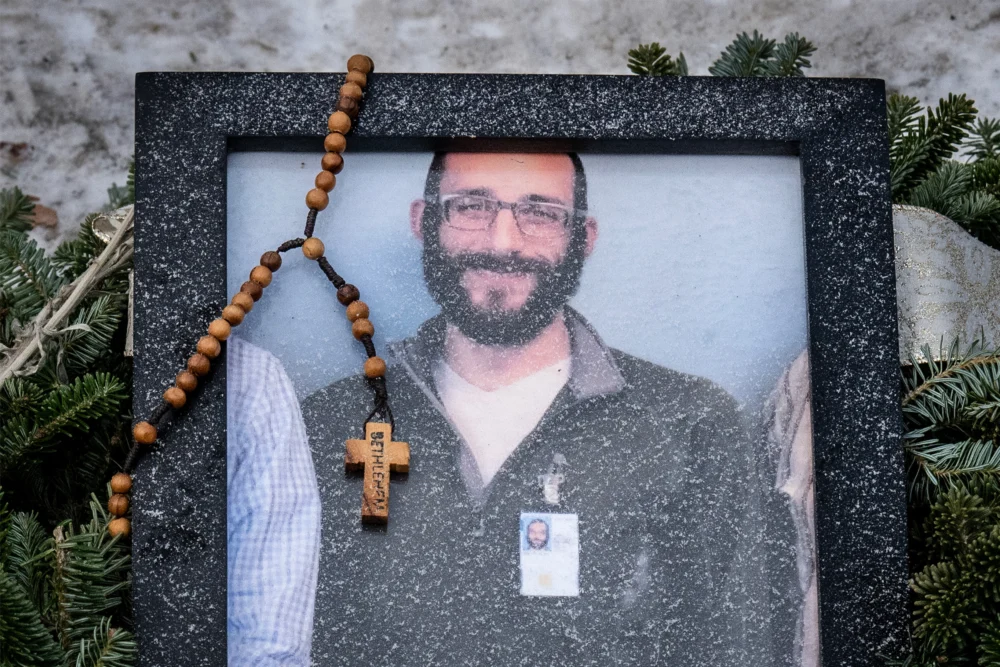
<h1>Doctor Says What Border Patrol Agents Did After Shooting Alex Pretti Was Sickening</h1>
<div>
<p>A chilling sworn testimony from a physician who directly witnessed the fatal shooting of Alex Pretti by Border Patrol agents in Minneapolis has sent shockwaves through the nation, revealing a disturbing alleged disregard for human life in the immediate aftermath. The doctor asserts that instead of rendering critical aid to the dying man, agents were inexplicably preoccupied with counting his bullet wounds as he bled out on the ground. This harrowing account starkly contradicts official narratives from the Department of Homeland Security and the Trump administration, which have painted Pretti as an aggressor, further fueling intense public outrage and demands for accountability amidst a federal crackdown that has gripped the city.</p>
<figure>
<img src=”https://futurism.com/wp-content/uploads/2026/01/doctor-agents-alex-pretti-shooting.jpg?quality=85&w=1152″ srcset=”https://futurism.com/wp-content/uploads/2026/01/doctor-agents-alex-pretti-shooting.jpg?w=280&h=187 280w, https://futurism.com/wp-content/uploads/2026/01/doctor-agents-alex-pretti-shooting.jpg?w=289&h=193 289w, https://futurism.com/wp-content/uploads/2026/01/doctor-agents-alex-pretti-shooting.jpg?w=300&h=200 300w, https://futurism.com/wp-content/uploads/2026/01/doctor-agents-alex-pretti-shooting.jpg?w=308&h=205 308w, https://futurism.com/wp-content/uploads/2026/01/doctor-agents-alex-pretti-shooting.jpg?w=324&h=216 324w, https://futurism.com/wp-content/uploads/2026/01/doctor-agents-alex-pretti-shooting.jpg?w=370&h=247 370w, https://futurism.com/wp-content/uploads/2026/01/doctor-agents-alex-pretti-shooting.jpg?w=580&h=387 580w, https://futurism.com/wp-content/uploads/2026/01/doctor-agents-alex-pretti-shooting.jpg?w=594&h=396 594w, https://futurism.com/wp-content/uploads/2026/01/doctor-agents-alex-pretti-shooting.jpg?w=600&h=400 600w, https://futurism.com/wp-content/uploads/2026/01/doctor-agents-alex-pretti-shooting.jpg?w=660&h=440 660w, https://futurism.com/wp-content/uploads/2026/01/doctor-agents-alex-pretti-shooting.jpg?w=768&h=512 768w, https://futurism.com/wp-content/uploads/2026/01/doctor-agents-alex-pretti-shooting.jpg?w=1024&h=683 1024w, https://futurism.com/wp-content/uploads/2026/01/doctor-agents-alex-pretti-shooting.jpg?w=1041&h=694 1041w, https://futurism.com/wp-content/uploads/2026/01/doctor-agents-alex-pretti-shooting.jpg?w=1128&h=752 1128w, https://futurism.com/wp-content/uploads/2026/01/doctor-agents-alex-pretti-shooting.jpg?w=1152&h=768 1152w” sizes=”(max-width: 1152px) 100vw, 1152px” fetchpriority=”high” width=”2048″ height=”1365″ alt=”The doctor’s harrowing account details how the Border Patrol agents allegedly did nothing to try Alex Pretti’s life as he bled out.”>
<figcaption>Roberto Schmidt / AFP via Getty Images</figcaption>
</figure>
<p>The sworn affidavit, submitted as part of a rapidly unfolding legal challenge against federal actions, provides a grim, firsthand glimpse into the events of Saturday’s fatal confrontation. The witness, a 29-year-old physician whose identity remains protected within the court documents, was present during the altercation in Minneapolis that led to the death of Alex Pretti, a 37-year-old ICU nurse. According to the doctor, Pretti was verbally protesting the presence and actions of the federal agents, but at no point did he brandish a weapon or physically assault any officer. This crucial detail directly contradicts official reports that have sought to justify the use of lethal force.</p>
<p>“Suddenly, an ICE agent shoved him to the ground,” the physician recounted in his testimony, clarifying that he used “ICE agent” interchangeably with Border Patrol officers, who were operating under the broad umbrella of federal deployment in the city. “My view of the altercation was partially obstructed, but after a few seconds, I saw at least four ICE agents point guns at the man. I then saw the agents shoot the man at least six or seven times.” This description paints a picture of a rapid and overwhelming use of force against an individual who, in the doctor’s assessment, posed no immediate physical threat. The sheer number of shots fired—”at least six or seven times”—suggests an intent far beyond simple incapacitation, raising serious questions about the agents’ training, their adherence to use-of-force protocols, and their de-escalation strategies, or lack thereof.</p>
<p>In the immediate, chaotic aftermath of the shooting, the doctor, driven by his professional oath and moral imperative, rushed towards the fallen man. He identified himself as a physician, urgently seeking to provide medical assistance. However, his attempts were met with resistance and bureaucratic obstruction. “The agents demanded to see his physician’s license,” the doctor stated, “which I obviously didn’t have with me in such an unexpected public incident.” This demand, under such dire circumstances where every second counted for a life hanging in the balance, highlights a concerning lack of urgency and understanding from the federal agents regarding basic emergency medical care. Precious moments, crucial for initiating life-saving interventions, were lost in a standoff over credentials that were utterly irrelevant to the immediate need for first aid.</p>
<p>Even more alarming was the observation that “none of the ICE agents who were near the victim were performing CPR” despite Pretti clearly being in “critical condition” and bleeding profusely. The doctor’s repeated pleas for access underscore the agents’ apparent inaction and the absence of any immediate attempt to provide aid to the man they had just shot. “Normally, I would not have been so persistent, but as a physician, I felt a professional and moral obligation to help this man,” he explained, emphasizing the unique circumstances. “Especially since none of the agents were helping him.” This profound sense of duty pushed him to confront armed federal agents, a testament to the severity of the situation and the perceived dereliction of duty by those who had just used lethal force.</p>
<p>When the agents finally relented, allowing him access to Pretti, the scene confirmed his worst fears and defied standard emergency medical procedures. “The victim was lying on his side,” the doctor noted, a position that is generally not conducive to assessing and treating severe trauma, particularly gunshot wounds to the torso. “That is not standard practice when a victim has been shot. Checking for a pulse and administering CPR is standard practice.” Instead of these universally accepted, immediate life-saving measures, the doctor observed a chillingly detached scene: “the ICE agents appeared to be counting his bullet wounds.” This detail is perhaps the most damning, suggesting a prioritization of forensic assessment over humanitarian intervention, a profound ethical failure in the eyes of medical professionals and the public alike, especially considering law enforcement’s duty of care even after using force.</p>
<p>Upon finally reaching Pretti, the doctor quickly confirmed that there was no pulse and immediately initiated CPR. His examination revealed the extent of the injuries: “at least three bullet wounds in his back, another on his upper left chest, and possibly one on his neck.” The presence of multiple entry wounds, particularly in the back, further challenges the official narrative that Pretti was a direct threat reaching for a weapon, strongly suggesting he may have been turning away or already on the ground when some shots were fired. The physician continued his strenuous efforts until Emergency Medical Services (EMS) arrived at the scene and took over, albeit too late to save Pretti’s life, which had already been lost due to massive blood loss and severe trauma.</p>
<p>The traumatic experience left the doctor profoundly shaken, a testament to the emotional toll such an event takes even on trained medical personnel. “When I returned to my apartment, I was extremely distraught,” he recounted. “I was sobbing and shaking uncontrollably.” His personal distress was compounded by the chaotic urban environment. Soon after, tear gas, deployed during ongoing protests against federal presence, began to seep into his apartment, forcing him to flee to a friend’s house. Even then, the emotional scars remained fresh: he arrived “still crying and shaking” and “barely able to speak,” a stark portrayal of the psychological impact of witnessing state-sanctioned violence and perceived negligence unfold directly before his eyes.</p>
<p>The killing of Alex Pretti, an ICU nurse dedicated to caring for sick and wounded veterans at the Minneapolis VA Medical Center, has ignited a fierce backlash against the escalated presence and tactics of federal agents, including ICE and Border Patrol, in Minneapolis. This incident is not isolated. The city has become a flashpoint for intense clashes between federal agents and citizens, marked by allegations of aggressive tactics, arbitrary detentions of both citizens and non-citizens, and another fatal shooting—that of 37-year-old Renee Good. These actions have drawn widespread condemnation from local officials, civil liberties advocates, and a concerned public who view the federal deployment, ordered under the guise of protecting federal property and restoring order, as an unconstitutional overreach and an infringement on fundamental civil rights.</p>
<p>In the face of overwhelming evidence, including “mountains of video evidence taken at the scene” and numerous eyewitness accounts, the Department of Homeland Security (DHS) and top officials in the Trump administration have maintained a staunchly defiant stance. They assert that Pretti “wanted to do maximum damage and massacre law enforcement.” DHS Secretary Kristi Noem went so far as to label his actions “domestic terrorism,” while White House Deputy Chief of Staff Stephen Miller publicly accused Pretti of being an “assassin.” These incendiary remarks, made without corroboration from independent investigations and directly contradicted by witness testimony, have been widely criticized as an attempt to demonize the victim, discredit witnesses, and justify excessive force, further polarizing an already tense national debate.</p>
<p>The doctor’s testimony directly refutes these official claims, offering a crucial counter-narrative that resonates deeply with the community’s distrust. “The victim was not actively threatening ICE agents or the public,” he stated unequivocally in his filing. “He was just yelling at the agents because he objected to ICE’s presence in our city.” This simple act of verbal protest, a fundamental right in a democratic society, was met with lethal force, according to the physician. His account underscores the dangerous disconnect between the federal government’s narrative of defending against domestic terrorism and the reality on the ground, where citizens expressing dissent are allegedly being met with deadly consequences, raising urgent questions about accountability and justice.</p>
<p>The incident has left not only the witness but also the wider community grappling with fear and a profound sense of insecurity. “I am not sure when I will return to my apartment,” the doctor confessed, articulating a sentiment shared by many Minneapolis residents. “I do not feel safe in my city.” This statement encapsulates the chilling effect of federal intervention that, instead of ensuring public safety, has seemingly eroded it, replacing civic trust with palpable fear and a pervasive sense of vulnerability. The events surrounding Alex Pretti’s death demand a thorough, independent investigation to uncover the truth, hold accountable those responsible, and restore a sense of justice and safety to a city traumatized by violence and conflicting narratives.</p>
<p><strong>More on immigration:</strong> <a href=”https://futurism.com/artificial-intelligence/ice-database-facial-scan” rel=”noreferrer” target=”_blank”><em>ICE Is Scanning Civilians’ Faces, Telling Them They’re Being Entered Into a Terrorism Database</em></a></p>
</div>
</div>