Faris Adani
Trump Forgets the Word for “Alzheimer’s” While Insisting His Memory Is Fine
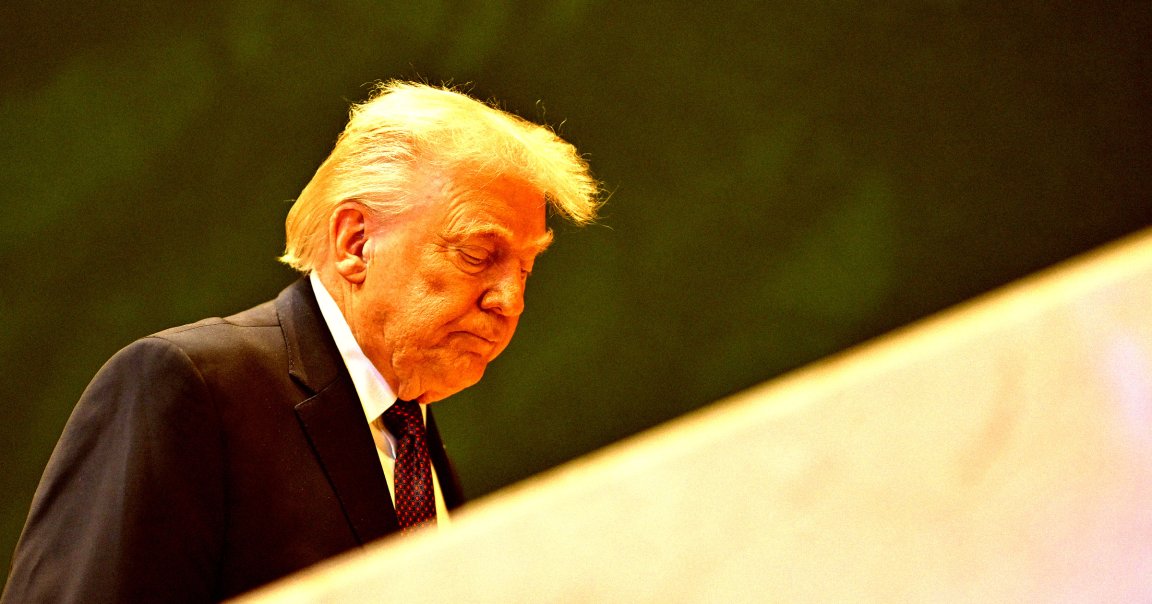
Former President Donald Trump, whose physical and mental fitness have been subjects of intense public scrutiny, recently stumbled during a video interview with *New York Magazine*, struggling to recall the name of Alzheimer’s disease. This latest gaffe adds to a growing list of incidents that have fueled speculation about the 79-year-old’s cognitive acuity, especially given his family history with the debilitating condition and his own frequent, defensive assertions of robust health. The moment, captured on video, shows Trump discussing his late father, Fred Trump, who battled Alzheimer’s for nearly a decade before his passing in 1999. “He had one problem. At a certain age, about 86, 87, he started getting… what do they call it?” Trump pondered aloud, visibly searching for the word. It was his White House press secretary, Karoline Leavitt, who promptly supplied the missing term: “Alzheimer’s.” Trump then continued, “Like an Alzheimer’s thing. Well, I don’t have it.” When directly asked if the disease was “something you think about at all,” Trump vehemently denied it, yet his response lacked the clarity he intended: “No, I don’t think about it at all. You know why? Because whatever it is, my attitude is whatever.”
This incident is particularly salient because it touches on a sensitive personal and public nerve. Alzheimer’s disease, characterized by progressive memory loss and cognitive decline, carries a strong genetic component, and a family history significantly increases an individual’s risk. For Trump, whose father succumbed to the illness, forgetting its name in a public forum, even momentarily, naturally draws heightened concern and questions about his own cognitive state. Critics have long pointed to instances of slurred speech, tangential remarks, and apparent lapses in memory during his public appearances and rallies. These observations, combined with visible physical signs such as swollen ankles and unexplained dark bruises on both hands—which some medical experts have speculated could indicate frequent intravenous treatments—have consistently undermined his claims of having a “clean bill of health.”
The former president has consistently attempted to quell these concerns with a defiant counter-narrative, often boasting about his performance on cognitive tests. During recent remarks from the Oval Office, following the signing of a bipartisan Whole Milk for Healthy Kids Act, Trump made the bizarre assertion that his lifelong consumption of dairy products was responsible for his purported cognitive excellence. “I’ve aced every one of them because I drink milk,” he declared. He has repeatedly referenced “acing” cognitive exams, including tests allegedly taken on January 2 and December 9, implying a recent and frequent evaluation of his neurological condition. He famously claimed to have achieved a top score on the Montreal Cognitive Assessment (MoCA), a 30-point screening tool designed to detect mild cognitive impairment, back in 2018. While passing such a screening test indicates an individual does not show overt signs of impairment at that specific moment, it is not a comprehensive neurological diagnosis, nor does it preclude future decline. It’s a snapshot, not a prognosis, and medical professionals caution against overstating its significance as a definitive measure of overall brain health, especially in a high-stakes political context.
The public debate surrounding Trump’s health, both physical and mental, mirrors a broader conversation about the age and fitness of leaders in an increasingly demanding global landscape. With presidential candidates, including incumbent President Joe Biden, often in their late 70s or early 80s, the scrutiny of their health has become a prominent and often politically weaponized issue. For Trump, the public’s perception of his vitality is crucial to his image as a strong, decisive leader. His staff, therefore, frequently engages in robust defenses that sometimes verge on the unintentionally comical. Karoline Leavitt, for instance, in the same *New York Magazine* interview, offered an anecdote intended to underscore Trump’s indefatigable work ethic. She claimed that the “Marine sentries who stand outside the Oval Office, they had to request more staff and bring up more Marines because the president is in the Oval Office so much.” She continued, “They’ve never had to do that before. They had to request more guys to stand by the door because they are running out of men to fill the shifts.” Leavitt further asserted that Trump is “working harder now than he did in his entire life. Even in real estate when he was on top of the world in New York.” These claims, while intended to project an image of boundless energy, sometimes backfire by sounding hyperbolic or out of touch with observed realities, only adding to the “optics conundrum” surrounding his health.
The intersection of health, public image, and political viability is a complex one. While commenting on a public figure’s health without direct examination raises ethical concerns for medical professionals, the nature of the presidency demands a certain level of transparency regarding a candidate’s capacity to fulfill the rigorous duties of the office. Historically, presidential health has often been shrouded in secrecy, from Woodrow Wilson’s debilitating stroke to Franklin D. Roosevelt’s polio and the concealed details of John F. Kennedy’s numerous ailments. Ronald Reagan’s second term also sparked quiet discussions about his cognitive state, though his Alzheimer’s diagnosis came years after he left office. In today’s hyper-connected world, with every public utterance and physical appearance scrutinized, the pressure for leaders to demonstrate unwavering health and cognitive function is unprecedented. Trump’s struggle to recall a common medical term, particularly one so personally relevant, serves as a stark reminder of these ongoing challenges and ensures that the conversation about his, and indeed any aging leader’s, fitness for office will continue to be a central, often contentious, point of public and political discourse.