Imroatul Nasiyah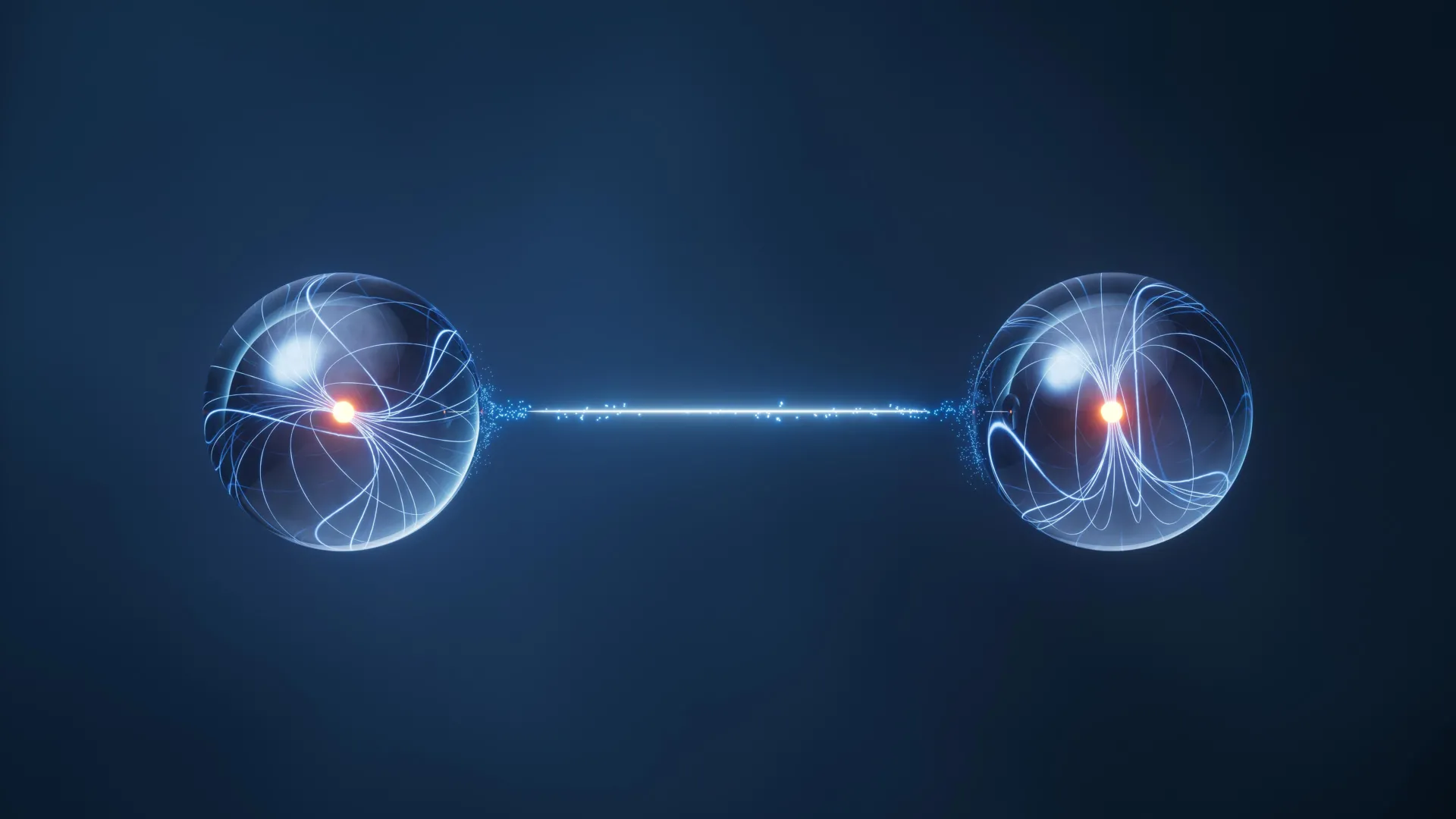
Quantum computers, with their unparalleled ability to perform specific calculations at speeds far beyond the reach of classical machines, hold the promise of transforming fields from medicine and materials science to cryptography and artificial intelligence. However, the very nature of quantum phenomena, particularly the delicate state of entanglement, makes connecting these powerful devices over significant distances an immense technological hurdle. Until very recently, the practical limit for establishing quantum links between two quantum computers was a mere few kilometers, constrained by the loss of quantum coherence within standard fiber optic cables. This meant that even within a single city, linking two quantum processors could be an insurmountable challenge, as exemplified by the inability to connect a quantum computer on the University of Chicago’s South Side campus with one housed in the iconic Willis Tower. The distance, though seemingly modest in the grand scheme of global communication, represented a fundamental barrier for existing quantum networking technologies.
A groundbreaking study, published on November 6th in the prestigious journal Nature Communications, has dramatically redefined these limitations. Led by Assistant Professor Tian Zhong of the University of Chicago Pritzker School of Molecular Engineering (UChicago PME), the research team has unveiled a novel approach that, in theory, could extend the reach of quantum connections to an astonishing 2,000 kilometers (approximately 1,243 miles). This dramatic leap forward means that a quantum computer at the University of Chicago could, with this new technology, potentially communicate with a device located as far away as Salt Lake City, Utah – a distance that was previously unthinkable.
Professor Zhong, who recently received the distinguished Sturge Prize for his pivotal work in this area, expressed his optimism about the future of quantum communication, stating, "For the first time, the technology for building a global-scale quantum internet is within reach." This sentiment underscores the profound implications of the team’s findings, signaling a paradigm shift in our ability to construct and utilize quantum networks on an unprecedented scale.
The Crucial Role of Quantum Coherence
The heart of building high-performance quantum networks lies in the ability to entangle quantum bits, or qubits, and crucially, to maintain this fragile entanglement as the quantum information travels through fiber optic cables. The longer the "coherence time" of these entangled qubits – essentially, the duration for which they can maintain their quantum state without decohering – the farther apart the connected quantum computers can be. It is this principle that Professor Zhong’s team has so effectively manipulated.
In their latest study, Zhong’s group achieved a remarkable feat: they significantly extended the coherence time of individual erbium atoms, the key elements used in their quantum entanglement experiments. Previously, these atoms could maintain their coherence for a mere 0.1 milliseconds. Through their innovative techniques, the team has managed to push this coherence time to over 10 milliseconds, with one experiment even achieving an impressive 24 milliseconds. Under ideal theoretical conditions, this substantial improvement in coherence time could enable quantum communication between computers separated by an estimated 4,000 kilometers. This distance is comparable to the span between the University of Chicago PME and the city of Ocaña, Colombia, illustrating the truly global potential of this advancement.
Reimagining Material Synthesis for Quantum Excellence
Perhaps one of the most compelling aspects of this breakthrough is that it was achieved not by developing entirely new and exotic materials, but by fundamentally rethinking how existing, well-understood materials are manufactured. The researchers focused on the rare-earth doped crystals essential for quantum entanglement, but instead of employing the traditional Czochralski method, they adopted a technique known as molecular-beam epitaxy (MBE).
Professor Zhong vividly described the conventional Czochralski approach as akin to a "melting pot." He explained, "You throw in the right ratio of ingredients and then melt everything. It goes above 2,000 degrees Celsius and is slowly cooled down to form a material crystal." Following this high-temperature melting and cooling process, scientists then resort to chemical carving and shaping to sculpt the crystal into a usable component, a process that Zhong likens to a sculptor meticulously chipping away at marble. This method, while effective to a degree, can introduce imperfections and limit the purity of the resulting crystal.
In stark contrast, MBE operates on a fundamentally different principle, described by Zhong as resembling "3D printing, but at the atomic scale." This sophisticated process involves meticulously depositing the crystal material in extremely thin layers, atom by atom, to build up the precise structure required for the quantum device. "We start with nothing and then assemble this device atom by atom," Zhong elaborated. "The quality or purity of this material is so high that the quantum coherence properties of these atoms become superb." This atomic-level precision and control lead to a material with an exceptionally high degree of purity, which is directly responsible for the enhanced quantum coherence observed in the erbium atoms.
While MBE is a well-established technique in other branches of materials science, its application to the specific type of rare-earth doped materials needed for quantum computing was novel. To adapt MBE for their unique requirements, Professor Zhong collaborated with Assistant Professor Shuolong Yang, a specialist in materials synthesis at UChicago PME. Their combined expertise allowed them to tailor the MBE process to produce the high-quality crystals essential for their quantum networking ambitions.
The significance of this innovative approach has been recognized by leading figures in the field. Professor Dr. Hugues de Riedmatten of the Institute of Photonic Sciences, who was not involved in the study, lauded the results as a "highly innovative" and "important step forward." He further elaborated, "It shows that a bottom-up, well-controlled nanofabrication approach can lead to the realization of single rare-earth ion qubits with excellent optical and spin coherence properties, leading to a long-lived spin photon interface with emission at telecom wavelength, all in a fiber-compatible device architecture. This is a significant advance that offers an interesting scalable avenue for the production of many networkable qubits in a controlled fashion." His endorsement highlights the potential of this method to not only improve qubit performance but also to facilitate the scalable production of the components needed for future quantum networks.
Transitioning from Theory to Real-World Application
With these promising theoretical and laboratory-based results, the next critical phase of the project involves rigorously testing whether these dramatically improved coherence times can indeed translate into successful long-distance quantum communication in real-world scenarios, moving beyond the controlled environment of a laboratory.
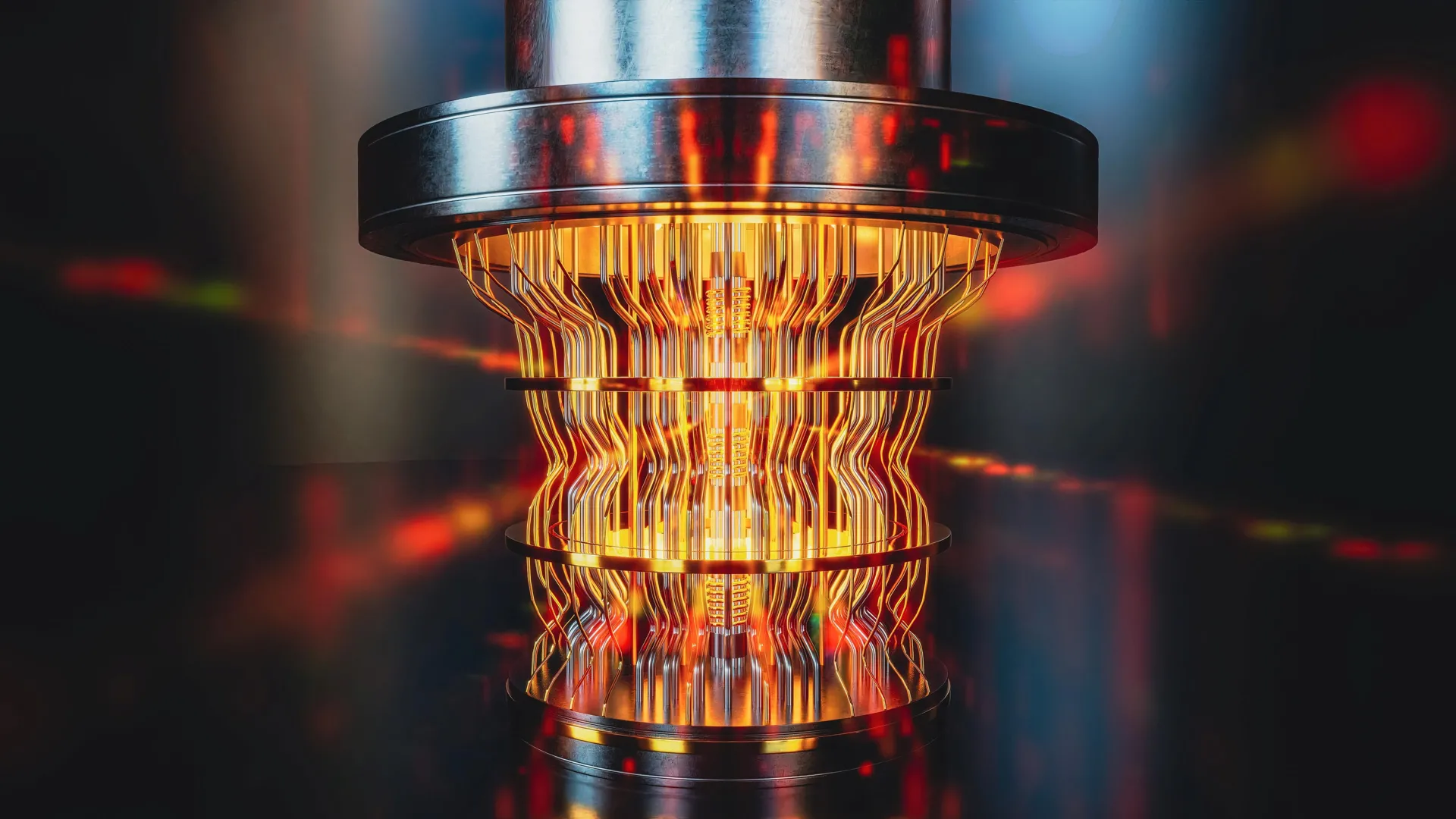
Professor Zhong outlined the team’s meticulous plan for this transition. "Before we actually deploy fiber from, let’s say, Chicago to New York, we’re going to test it just within my lab," he stated. To achieve this, the team intends to link two qubits, each housed within separate dilution refrigerators – specialized cryogenic devices essential for maintaining the extremely low temperatures required for quantum operations. This experimental setup will utilize approximately 1,000 kilometers of coiled fiber optic cable within Zhong’s laboratory. This controlled testbed will serve as a crucial validation step, allowing them to verify that the system performs as expected and to identify any potential issues before scaling up to inter-city or even inter-state distances.
"We’re now building the third fridge in my lab," Zhong revealed. "When it’s all together, that will form a local network, and we will first do experiments locally in my lab to simulate what a future long-distance network will look like." By creating this localized quantum network, the team aims to mimic the conditions and challenges of a future long-distance quantum internet, gathering invaluable data and insights before embarking on more ambitious deployments. "This is all part of the grand goal of creating a true quantum internet, and we’re achieving one more milestone towards that," Professor Zhong concluded, underscoring the sustained effort and incremental progress towards realizing the ultimate vision of a globally interconnected quantum computing infrastructure.