Imroatul Nasiyah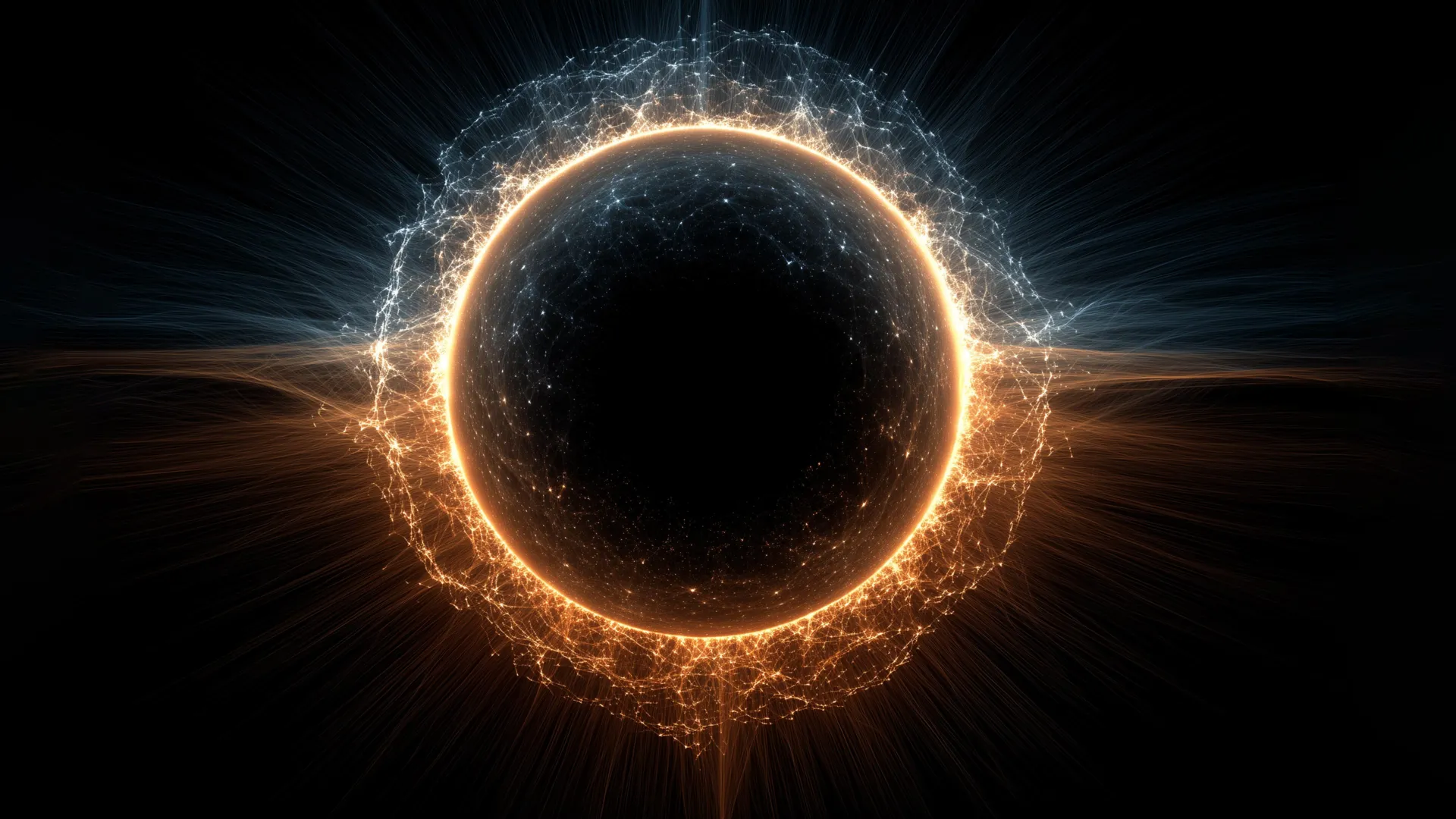
For nearly a century, the enigmatic presence of dark matter has loomed as one of the most profound puzzles in cosmology. Although invisible to our telescopes and undetectable through direct interaction, its pervasive gravitational influence is the unseen architect shaping galaxies and dictating the grand, sweeping architecture of the universe. At the esteemed Perimeter Institute for Theoretical Physics, two brilliant minds, James Gurian and Simon May, are at the forefront of unraveling a particularly fascinating aspect of this cosmic mystery: how a theoretical variant known as self-interacting dark matter (SIDM) might profoundly alter the very processes by which cosmic structures grow and evolve over eons. Their groundbreaking research, meticulously detailed in a recent publication in the prestigious journal Physical Review Letters, introduces a novel computational tool designed to meticulously study the intricate effects of SIDM on galaxy formation. This innovative approach shatters previous limitations, enabling physicists to explore a spectrum of particle interactions that were once prohibitively complex or practically impossible to model with the necessary accuracy.
The core of their investigation lies in understanding the unique behavior of SIDM. Unlike the standard, weakly interacting massive particles (WIMPs) that dominate many dark matter models, SIDM particles possess the unique ability to collide with one another. Crucially, however, they remain stubbornly aloof from baryonic matter – the familiar stuff of stars, planets, and ourselves, composed of protons, neutrons, and electrons. These self-collisions are not destructive; instead, they conserve energy through a process termed elastic self-interaction. This fundamental difference in behavior can exert a potent influence on dark matter halos, those vast, invisible envelopes of dark matter that envelop galaxies and act as gravitational anchors, guiding their formation and subsequent evolution. "Dark matter forms relatively diffuse clumps which are still much denser than the average density of the universe," explains Gurian, a Perimeter postdoctoral fellow and co-author of the study. "The Milky Way and other galaxies live in these dark matter halos." These halos are not static entities; they are dynamic environments where the internal physics of dark matter plays a crucial role.
The self-interacting nature of SIDM can, under certain conditions, initiate a dramatic phenomenon known as gravothermal collapse within these dark matter halos. This process, rooted in a somewhat counterintuitive aspect of gravitational physics, dictates that systems bound by gravity actually become hotter as they lose energy, rather than cooling down as one might intuitively expect. "You have this self-interacting dark matter which transports energy, and it tends to transport energy outwards in these halos," elaborates Gurian. "This leads to the inner core getting really hot and dense as energy is transported outwards." Over extended cosmic timescales, this outward energy transport can drive the central region, or core, of the dark matter halo towards a catastrophic and potentially profound collapse. This is a far cry from the serene, stable halos envisioned in simpler dark matter models.
The challenge of accurately simulating the intricate structures formed by SIDM has long been a significant hurdle for cosmologists. Existing computational methods, while powerful in their own right, often operate effectively only within specific regimes of dark matter density and interaction frequency. Some simulations excel when dark matter is thinly dispersed and collisions are infrequent, mirroring the behavior of non-interacting dark matter. Conversely, other methods are best suited for extremely dense dark matter environments where interactions are a constant occurrence. "One approach is an N-body simulation approach that works really well when dark matter is not very dense and collisions are infrequent," Gurian clarifies. "The other approach is a fluid approach – and this works when dark matter is very dense and collisions are frequent." The critical gap, the intermediary regime where dark matter is neither exceptionally sparse nor incredibly dense, remained a blind spot. "But for the in-between, there wasn’t a good method," Gurian states with emphasis. "You need an intermediate range approach to correctly go between the low-density and high-density parts. That was the origin of this project."
To bridge this crucial computational gap, Gurian and his collaborator, Simon May – a former Perimeter postdoctoral researcher now holding a prestigious ERC Preparative Fellowship at Bielefeld University – embarked on the development of a sophisticated new code christened KISS-SIDM. This innovative software acts as a vital bridge, seamlessly connecting the previously disparate simulation methods. The result is a tool that delivers significantly higher accuracy in its predictions while demanding substantially less computational power, a critical factor for widespread adoption and research accessibility. Furthermore, in a move that champions open science, the KISS-SIDM code is made publicly available, empowering the global research community to explore these complex phenomena. "Before, if you wanted to check different parameters for self-interacting dark matter, you needed to either use this really simplified fluid model, or go to a cluster, which is computationally expensive," Gurian explains. "This code is faster, and you can run it on your laptop." This democratization of advanced simulation capabilities promises to accelerate the pace of discovery in dark matter research.
The growing interest in interacting dark matter models, including SIDM, is not merely an academic pursuit; it is directly fueled by puzzling observational features observed in galaxies that have, thus far, resisted explanation within the framework of standard, non-interacting dark matter models. These anomalies, ranging from the unexpected density profiles of dark matter halos in dwarf galaxies to the structure of galaxy clusters, suggest that dark matter might possess internal dynamics we have yet to fully grasp. "There has been considerable interest recently in interacting dark matter models, due to possible anomalies detected in observations of galaxies that may require new physics in the dark sector," notes Neal Dalal, a distinguished member of the Perimeter Institute research faculty. He further emphasizes the impact of Gurian and May’s work: "Previously, it was not possible to perform accurate calculations of cosmic structure formation in these sorts of models, but the method developed by James and Simon provides a solution that finally allows us to simulate the evolution of dark matter in models with significant interactions," Dalal states. "Their paper should enable a broad spectrum of studies that previously were intractable."
The implications of SIDM core collapse extend beyond the realm of theoretical cosmology, potentially offering observable signatures that could help us discern between different dark matter models. One of the most tantalizing possibilities is a connection to the formation of supermassive black holes at the centers of galaxies. While the exact endpoint of this dramatic gravitational collapse remains an open and actively investigated question, the ability to simulate these extreme conditions with unprecedented detail is a monumental step forward. "The fundamental question is, what’s the final endpoint of this collapse? That’s what we’d really like to do – study the phase after you form a black hole." By providing a powerful and accessible tool to probe these profound cosmic processes, the KISS-SIDM code developed by Gurian and May represents a pivotal advance in our quest to understand the fundamental nature of dark matter and the intricate, dynamic evolution of the universe itself. It opens a new window into the unseen forces that sculpt our cosmos, promising deeper insights into the very fabric of reality.