anjir abdul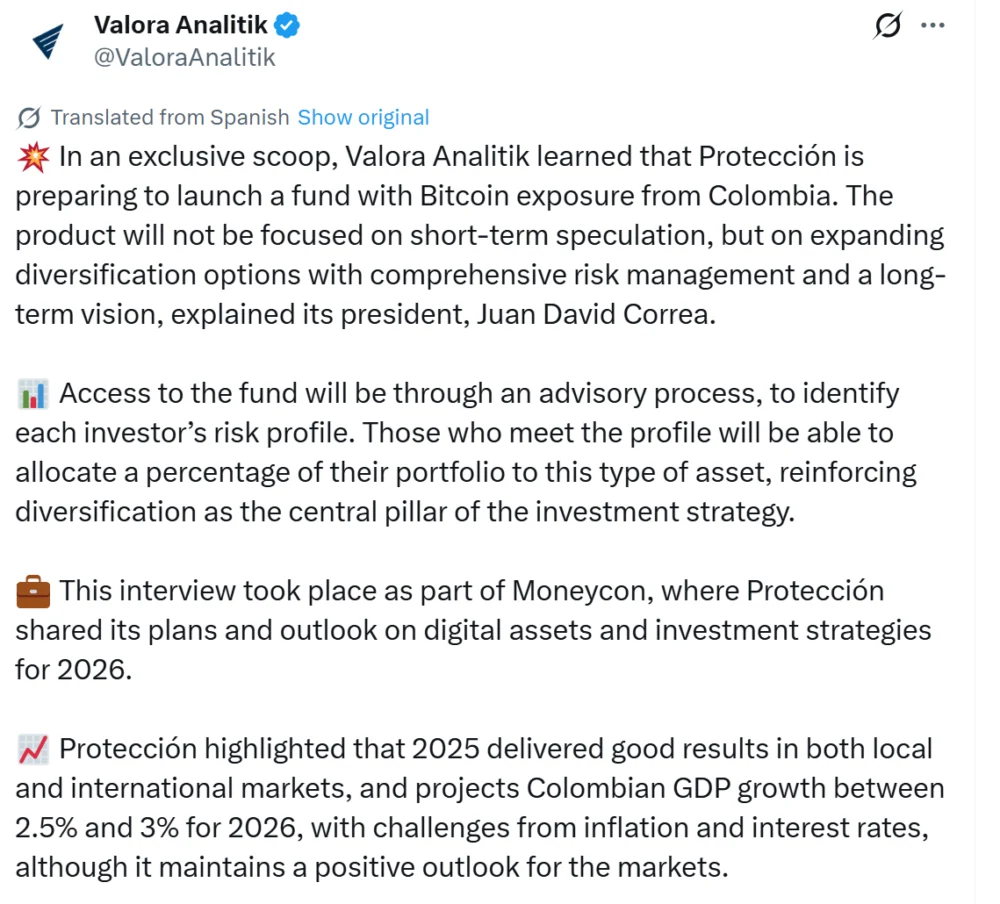
In a landmark move poised to significantly impact the financial landscape of Latin America, AFP Protección, Colombia’s second-largest private pension and severance fund manager, is preparing to launch an innovative investment fund that will offer its clients exposure to Bitcoin. This strategic decision signals a growing acceptance of digital assets within traditional institutional finance, particularly within the pension sector, and places Colombia at the forefront of crypto integration in the region.
The initiative was confirmed by Juan David Correa, president of Protección SA, during an interview with the local financial outlet Valora Analitik. Correa’s confirmation underscores the seriousness and deliberate nature of Protección’s foray into the digital asset space, emphasizing a cautious yet forward-thinking approach. The fund will not be a free-for-all; rather, access will be carefully managed and limited, granted only after a rigorous, personalized advisory process. This process is designed to thoroughly assess each investor’s unique risk profile, ensuring that only clients who meet specific, predetermined criteria will be eligible to allocate a portion of their portfolios to Bitcoin (BTC). This meticulous approach highlights the fund’s commitment to prudent risk management and investor protection, acknowledging the inherent volatility and novel characteristics of cryptocurrency investments.
Correa articulated the core philosophy behind this new offering, stating, “The most important element is diversification.” He further elaborated that “those who can participate will find a space for a percentage of their portfolio, if they so wish, to be exposed to this type of asset.” This statement frames Bitcoin not as a speculative gamble, but as a legitimate tool for portfolio diversification, a sentiment increasingly echoed by institutional investors worldwide. For a pension fund, diversification is paramount, as it aims to optimize returns while mitigating risks over long investment horizons, crucial for securing the financial futures of millions of Colombians.
Protección’s move is not an isolated incident but rather a continuation of a nascent trend within Colombia’s pension sector. It follows a similar pioneering step taken by Skandia Administradora de Fondos de Pensiones y Cesantías, which began offering Bitcoin exposure in one of its portfolios in September of the previous year. With this launch, Protección officially becomes the second major pension fund administrator in Colombia to embrace the digital asset space, solidifying a pattern of institutional adoption that could inspire other financial giants in the country and across Latin America. This sequential adoption by leading pension funds suggests a thorough due diligence process and a shared conviction regarding Bitcoin’s long-term value proposition and role in modern diversified portfolios.
Founded in 1991, AFP Protección is a titan in Colombia’s financial sector, managing an astounding portfolio exceeding 220 trillion Colombian pesos, which translates to approximately $55 billion USD. This massive asset base serves over 8.5 million clients across various mandatory and voluntary pension plans, as well as severance accounts. Its sheer scale and influence mean that any strategic shift, especially one as significant as integrating Bitcoin, sends ripples throughout the entire market. The broader mandatory pension fund market in Colombia is substantial, having reached 527.3 trillion pesos as of November 2025, with nearly half of those assets strategically invested abroad to achieve diversification and optimize returns. The decision by such a significant player to allocate even a small fraction of this immense capital to Bitcoin underscores a profound shift in perception and strategy within conservative investment circles.

Crucially, Protección has clarified that the introduction of this new Bitcoin-linked fund does not signify a fundamental shift in how the vast majority of Colombian pension savings are managed. The bedrock of pension portfolios will continue to be fixed income instruments, equities, and other traditional assets that have historically formed the core of long-term retirement planning. Instead, the Bitcoin product is meticulously positioned as an additional, albeit specialized, option for qualified investors who are actively seeking enhanced diversification and potentially higher returns in a rapidly evolving global financial landscape. This approach ensures that the primary fiduciary responsibility of preserving and growing pension savings remains intact, while simultaneously offering a gateway to emerging asset classes for a select segment of its clientele.
The timing of Protección’s announcement is particularly noteworthy, given the broader context of increasing cryptocurrency integration and regulatory developments in Colombia. Earlier this month, the Colombian tax authority, DIAN (Dirección de Impuestos y Aduanas Nacionales), introduced a comprehensive mandatory reporting framework for crypto service providers. This framework requires exchanges, custodians, and intermediaries to meticulously collect and submit detailed user and transaction data. This resolution explicitly aligns Colombia with the Organisation for Economic Co-operation and Development’s (OECD) Crypto-Asset Reporting Framework (CARF), which facilitates the automatic exchange of crypto-related tax information with foreign authorities. Under this new regime, service providers are mandated to report identifying details and transaction data for reportable users, comply with stringent due diligence and valuation standards, and face penalties for non-compliance. While this regulatory move primarily targets tax compliance, it also contributes to the formalization and legitimization of the crypto industry within Colombia, potentially creating a more structured and secure environment for institutional players like Protección to operate.
Colombia’s embrace of digital assets extends beyond pension funds and tax regulations. The country has seen other significant players enter the crypto space, indicating a holistic shift. For instance, Bancolombia Group, one of the nation’s leading banks, launched a crypto exchange and a peso stablecoin, further illustrating the mainstreaming of digital currencies within the national financial ecosystem. These developments collectively paint a picture of Colombia as a progressive jurisdiction that is actively exploring and integrating blockchain technology and cryptocurrencies into its financial infrastructure, rather than resisting it.
The rationale for pension funds, traditionally conservative institutions, to consider Bitcoin is multi-faceted. Bitcoin has matured significantly since its inception, evolving from a niche digital currency to a recognized alternative asset class with increasing institutional acceptance. Its perceived uncorrelated nature with traditional financial markets can offer valuable diversification benefits, especially in times of economic uncertainty or heightened inflation. Many investors view Bitcoin as a potential hedge against inflation, given its fixed supply and decentralized nature, which contrasts sharply with fiat currencies susceptible to quantitative easing. While its volatility remains a key characteristic, the long-term growth trajectory and increasing liquidity have made it an attractive, albeit high-risk, component for strategic asset allocation.
For Colombian investors, Protección’s new fund represents a significant step towards greater financial inclusion and access to cutting-edge investment opportunities. While initially limited to qualified individuals, it lays the groundwork for broader access in the future. For the global cryptocurrency market, the entry of major pension funds like Protección adds further legitimacy and institutional capital, potentially contributing to greater price stability and wider adoption. It also sets a powerful precedent for other Latin American countries, many of which share similar economic dynamics and a growing interest in digital assets. As regulatory frameworks continue to evolve globally, the cautious yet determined approach taken by Colombian pension funds could serve as a model for responsible institutional integration of cryptocurrencies.
In conclusion, AFP Protección’s decision to launch a Bitcoin-exposed investment fund marks a pivotal moment for both the Colombian financial sector and the broader narrative of institutional crypto adoption. It reflects a growing recognition of Bitcoin’s role as a legitimate asset for diversification, even within the highly regulated and conservative world of pension management. As Colombia continues to build a robust regulatory framework and witnesses further integration of digital assets across its financial institutions, the move by Protección is a clear signal that the future of finance is increasingly intertwined with the innovative potential of cryptocurrencies, setting a compelling example for other nations to follow.