Imroatul Nasiyah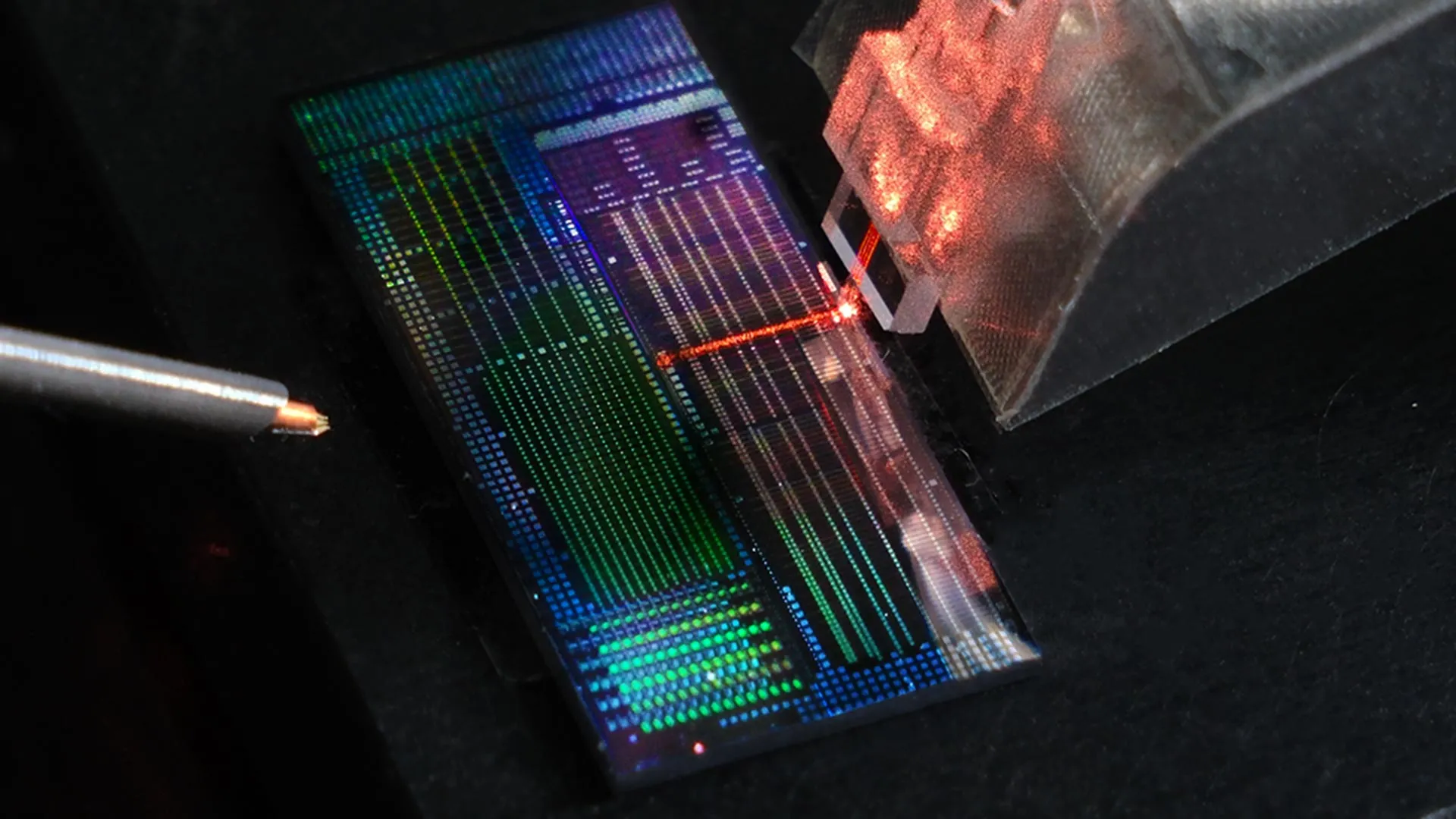
Just as critically important as its minuscule size is the revolutionary method by which this groundbreaking device is manufactured. Eschewing the reliance on custom-built, often cumbersome, laboratory equipment, the researchers have embraced scalable manufacturing techniques that bear a striking resemblance to the highly refined processes used to produce the processors found in virtually every modern electronic device. This includes the sophisticated processors in our computers, the ubiquitous chips in our smartphones, the intricate control systems in our vehicles, and even the seemingly simple components within our household appliances – essentially, any technology that is powered by electricity, from the most advanced supercomputers to humble toasters. This adoption of established, high-volume manufacturing methods makes the device far more practical and economically viable for mass production, a crucial factor for the widespread adoption of quantum computing.
A Tiny Device Built for Real-World Scale
The visionary research was spearheaded by Jake Freedman, an incoming PhD student in the Department of Electrical, Computer and Energy Engineering, working in close collaboration with Matt Eichenfield, a distinguished professor and the Karl Gustafson Endowed Chair in Quantum Engineering. The team also benefited from invaluable contributions from a cadre of scientists at Sandia National Laboratories, including co-senior author Nils Otterstrom, whose expertise was instrumental in bringing this complex project to fruition. Together, this multidisciplinary group has successfully engineered a device that elegantly harmonizes diminutive size, exceptional performance, and a significantly lower cost of production, thereby positioning it as an ideal candidate for mass manufacturing.
At the core of this transformative technology lie microwave-frequency vibrations, which oscillate at astonishing speeds, billions of times per second. These precisely orchestrated vibrations empower the chip to manipulate laser light with an extraordinary degree of accuracy and finesse. By directly influencing and controlling the phase of a laser beam, the device gains the remarkable ability to generate new laser frequencies. These newly generated frequencies are not only stable, ensuring consistent performance, but also highly efficient, minimizing energy waste. This advanced level of control over light is a paramount requirement, not only for the intricate demands of quantum computing but also for the rapid advancement of burgeoning fields such as quantum sensing, which promises unparalleled measurement capabilities, and quantum networking, which aims to establish secure and powerful communication channels.
Why Quantum Computers Need Ultra-Precise Lasers
The scientific community has identified several highly promising architectures for quantum computing, with trapped ions and trapped neutral atoms emerging as particularly compelling candidates for storing and manipulating quantum information. In these sophisticated systems, each individual atom functions as a qubit, capable of existing in a superposition of states and exhibiting entanglement. The ability to perform quantum calculations hinges on the precise interaction with these delicate atoms. Researchers achieve this by directing carefully tuned laser beams at them, akin to issuing precise instructions that enable complex calculations to unfold. For this intricate process to function effectively, each laser beam must be meticulously adjusted with an almost unimaginable level of precision, often requiring adjustments accurate to within billionths of a percent of the desired frequency.
"Creating new copies of a laser with very exact differences in frequency is one of the most important tools for working with atom- and ion-based quantum computers," explained Jake Freedman, the lead researcher on this groundbreaking project. "However, to achieve this at the scale required for future quantum systems, you absolutely need technology that can efficiently generate those new frequencies in a repeatable and robust manner."
The current state of technology often relies on large, cumbersome, table-top devices that demand substantial amounts of microwave power to produce these precise frequency shifts. While these systems have proven effective for small-scale experimental setups and proof-of-concept demonstrations, they are fundamentally impractical and economically unfeasible for the vast number of optical channels that will be necessary to control the multitude of qubits in future quantum computers. Professor Matt Eichenfield elaborated on this critical limitation: "You’re not going to build a quantum computer with 100,000 bulk electro-optic modulators sitting in a warehouse full of optical tables," he stated. "You need some much more scalable ways to manufacture them that don’t have to be hand-assembled and with long optical paths. While you’re at it, if you can make them all fit on a few small microchips and produce 100 times less heat, you’re much more likely to make it work."
Lower Power Use, Less Heat, More Qubits
The newly developed device directly addresses these critical challenges by generating laser frequency shifts through highly efficient phase modulation. Crucially, it achieves this remarkable feat while consuming approximately 80 times less microwave power compared to many existing commercial modulators. This significant reduction in power consumption translates directly into a proportional decrease in heat generation. Lower heat output is a game-changer, as it allows for a much denser packing of optical channels in close proximity to each other, potentially enabling the integration of a vast number of these modulators onto a single, compact microchip. When all these advantages are considered collectively, they transform the chip from a laboratory curiosity into a robust and scalable system capable of orchestrating the precise interactions between atoms that are the very foundation of quantum calculations.
Built With the Same Technology as Modern Microchips
One of the project’s most significant and forward-looking achievements is the fact that the device was entirely manufactured within a fabrication facility, or "fab," the very same type of highly controlled and sophisticated environment used to produce advanced microelectronics that power our daily lives. "CMOS fabrication is the most scalable technology humans have ever invented," emphasized Professor Eichenfield, highlighting the profound implications of this manufacturing choice. "Every microelectronic chip in every cell phone or computer has billions of essentially identical transistors on it. So, by using CMOS fabrication, in the future, we can produce thousands or even millions of identical versions of our photonic devices, which is exactly what quantum computing will need."
According to Nils Otterstrom, the collaborative effort involved taking modulator technologies that were once characterized by their bulkiness, high cost, and significant power demands and fundamentally redesigning them to be smaller, more energy-efficient, and considerably easier to integrate into complex systems. "We’re helping to push optics into its own ‘transistor revolution,’ moving away from the optical equivalent of vacuum tubes and towards scalable integrated photonic technologies," Otterstrom remarked, drawing a powerful parallel to the transformative impact of the transistor on electronics.
Toward Fully Integrated Quantum Photonic Chips
The researchers are not resting on their laurels; they are actively pursuing the development of fully integrated photonic circuits that will combine multiple essential functions – including frequency generation, filtering, and pulse shaping – onto a single, monolithic chip. This ambitious undertaking represents a significant leap forward, moving the entire field closer to the realization of a complete, fully operational quantum photonic platform. In the immediate future, the team plans to forge strategic partnerships with leading quantum computing companies. These collaborations will enable them to rigorously test their innovative chips within state-of-the-art trapped-ion and trapped-neutral-atom quantum computers, providing invaluable real-world validation and feedback. "This device is one of the final pieces of the puzzle," Freedman stated with palpable optimism. "We’re getting close to a truly scalable photonic platform capable of controlling very large numbers of qubits." The foundational research and development for this pivotal project received crucial support from the U.S. Department of Energy through the Quantum Systems Accelerator program, a distinguished National Quantum Initiative Science Research Center, underscoring the national importance and strategic investment in advancing quantum technologies.