anjir abdul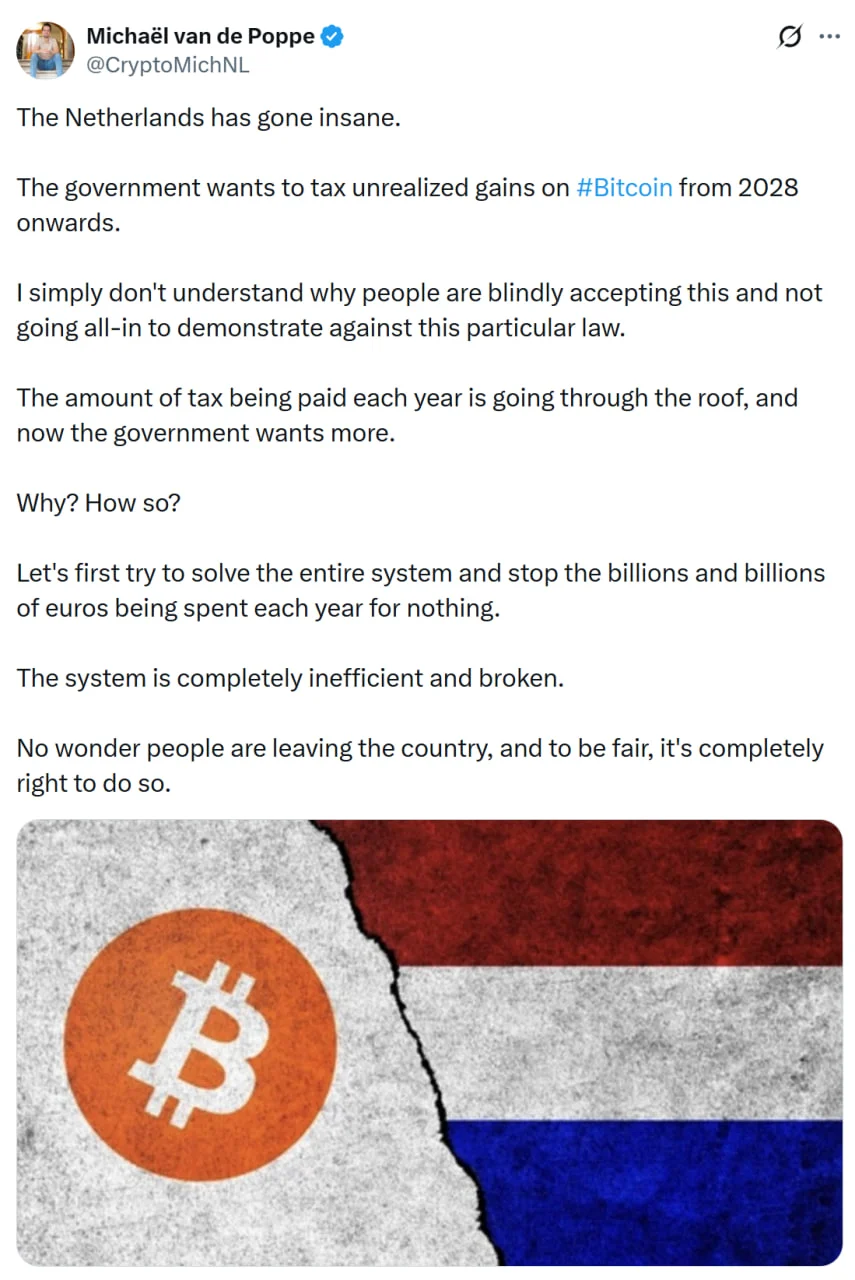
The Dutch government is advancing a controversial proposal to impose an annual tax on unrealized capital gains across a broad spectrum of investments, including equities, bonds, and increasingly prominent digital assets like cryptocurrencies, a move that has ignited widespread concern among investors and analysts who warn of potential capital flight and a chilling effect on the nation’s investment landscape. This significant overhaul of the country’s Box 3 asset tax regime, which could take effect as early as 2028, marks a radical departure from traditional taxation methods and aims to rectify long-standing legal challenges to the existing system.
The impetus for this dramatic shift stems from a series of landmark rulings by the Dutch Supreme Court, which in December 2021, and again subsequently, declared the previous Box 3 system unlawful. For decades, the Netherlands taxed wealth in Box 3 not on actual returns, but on a fictitious or assumed rate of return, regardless of whether investors made a profit or suffered a loss. This system, designed for administrative simplicity, proved particularly disadvantageous during periods of low interest rates, as it often led to individuals paying tax on gains they had not actually realized, or even on non-existent profits. The court’s judgment underscored the principle that taxation must be based on actual, rather than assumed, returns, plunging the government into a protracted and complex quest for a legally sound and fiscally viable alternative.
In response to the judicial mandate, a majority of lawmakers in the Tweede Kamer (House of Representatives) now appear poised to support a new system that would tax actual returns, including both realized and, crucially, unrealized gains. Under this proposed regime, investors would be required to pay an annual tax on the increase in value of their assets, even if those assets have not been sold. This means that if a stock or a cryptocurrency token appreciates in value over the course of a year, the investor would owe tax on that "paper gain," irrespective of whether they have converted it into cash. NL Times reported on Tuesday that such a plan is likely to be implemented, with discussions in parliament revealing a broad, albeit sometimes reluctant, consensus.
State Secretary for Taxation Eugè Theijnen has been at the forefront of defending the proposal, acknowledging its imperfections but emphasizing the dire need for a sustainable solution. During recent parliamentary debates, Heijnen faced more than 130 questions from concerned lawmakers, underscoring the complexity and potential ramifications of the plan. While many representatives expressed reservations about the practicalities and fairness of taxing unrealized gains, most ultimately signaled their intent to back the measure. The primary driver behind this political alignment is the pressing fiscal imperative: delaying implementation further is estimated to result in an annual loss of approximately 2.3 billion euros ($2.7 billion) in government revenue. With public finances already under considerable pressure, the caretaker government has largely ruled out further postponements, aiming for the 2028 target.
The political backing for this contentious tax is surprisingly broad, bridging traditional left-right divides. Parties such as the People’s Party for Freedom and Democracy (VVD), Christian Democratic Appeal (CDA), JA21 (Right Answer 2021), Farmer–Citizen Movement (BBB), and the Party for Freedom (PVV) are expected to support the bill. Concurrently, left-leaning parties, including Democrats 66 (D66) and the GreenLeft–Labour Party (GroenLinks–PvdA), also favor the changes. Their arguments often center on the administrative simplicity of taxing unrealized gains compared to the complexities of tracking and taxing only realized profits, and the necessity of preventing significant budget shortfalls. This unusual bipartisan consensus highlights the urgency with which the Dutch political establishment views the need to reform the Box 3 system and secure government revenues.
The specific implications for various asset classes are a focal point of the debate. For investors in traditional equities and bonds, the annual taxation on unrealized gains introduces a new layer of complexity and potential liquidity challenges. Long-term investors, who typically hold assets for years or even decades, could find themselves facing annual tax bills on portfolio growth without necessarily having the cash flow from sales to cover these liabilities. This could potentially force investors to sell a portion of their holdings simply to pay the tax, undermining long-term investment strategies and potentially discouraging capital formation.
However, the impact on the burgeoning cryptocurrency market is particularly acute and has drawn sharp criticism from the digital asset community. Cryptocurrencies are renowned for their extreme volatility, with values capable of swinging wildly in short periods. Taxing unrealized gains in such a dynamic environment presents significant practical challenges. How would valuations be consistently determined? What happens if an investor pays tax on a peak valuation, only for the asset to plummet shortly thereafter? The lack of liquidity for many crypto assets, especially less common tokens, further complicates matters, potentially forcing holders into difficult positions where they must sell valuable assets at inopportune times to meet tax obligations.

The contrast with real estate taxation under the proposed system is also notable and has sparked discussions about fairness. While stocks, bonds, and cryptocurrencies would face annual taxation on unrealized gains, real estate investors would reportedly benefit from a more favorable regime. For primary residences, existing exemptions would likely remain. For investment properties, the proposal suggests allowing deductions for costs and taxing profits only upon realization, with an additional levy for personal use of second homes. This disparity raises questions about equity, as it appears to create different standards for different asset classes, potentially favoring real estate over other forms of investment.
The most vehement opposition to the plan centers on the warnings of capital flight. Prominent Dutch crypto analyst Michaël van de Poppe vociferously condemned the proposal as "insane," arguing it would drastically increase annual tax burdens and incentivize wealthy individuals and investors to relocate their assets and even themselves out of the country. "No wonder people are leaving the country, and to be fair, it’s completely right to do so," he tweeted, reflecting a sentiment echoed by many in the investment community. Another user on X (formerly Twitter) dramatically likened the proposed tax to historical events of civil unrest, stating, "Taxes on unrealized gains and wealth may be this century’s Boston Tea Party, Reign of Terror, or Bolshevik moment."
Economists and financial experts often highlight that capital is highly mobile in the modern global economy. Imposing a tax on unrealized gains, especially on liquid assets, could make the Netherlands significantly less attractive as an investment destination. High-net-worth individuals, institutional investors, and innovative startups, particularly in the tech and crypto sectors, could choose to base themselves in jurisdictions with more favorable tax regimes. This could lead to a brain drain, reduced foreign direct investment, and a stifling of innovation, ultimately harming the Dutch economy’s long-term growth prospects. The Netherlands prides itself on being an open, trading nation, and such a tax could undermine its competitiveness and reputation.
Beyond capital flight, the practical and ethical challenges of taxing unrealized gains are considerable. One major concern is the "liquidity crunch" – how individuals will pay taxes on assets they haven’t sold. This could force premature selling of assets, potentially disrupting markets or forcing investors to liquidate positions at unfavorable times. Valuation is another hurdle; accurately assessing the fair market value of diverse, often illiquid assets annually presents a massive administrative burden for both taxpayers and the tax authorities. Furthermore, the inherent volatility of markets means that gains made in one year could be erased by losses in the next, leaving investors having paid tax on wealth that subsequently vanished. The absence of a clear mechanism for reclaiming tax paid on "paper gains" that later evaporate is a significant point of contention regarding the fairness of the proposal.
Globally, while some countries implement wealth taxes or exit taxes on specific asset transfers, an annual, broad-based tax on unrealized capital gains on liquid assets like stocks and cryptocurrencies is relatively rare. Most jurisdictions tax capital gains only when they are realized through a sale or other taxable event. This distinction is crucial, as it fundamentally alters the risk profile and investment calculus for individuals. The Dutch proposal, therefore, places the Netherlands in a somewhat unique position, potentially making it an outlier in the international financial landscape. This could exacerbate the risk of capital flight, as investors seek more conventional and predictable tax environments.
As the 2028 implementation target looms, the debate surrounding the Box 3 reform is far from over. While the political will to enact changes appears strong due to fiscal pressures and court mandates, the practical implications and potential economic fallout remain a significant concern. The government may face further legal challenges, public protests, and intense lobbying from various industry groups. The final form of the legislation, including specific tax rates and detailed implementation rules, will be critical in determining its ultimate impact. For now, Dutch investors, particularly those in the volatile cryptocurrency market, are bracing for a future where their wealth could be taxed annually, whether they choose to sell it or not, marking a pivotal moment in the nation’s financial policy.