isnaini azizah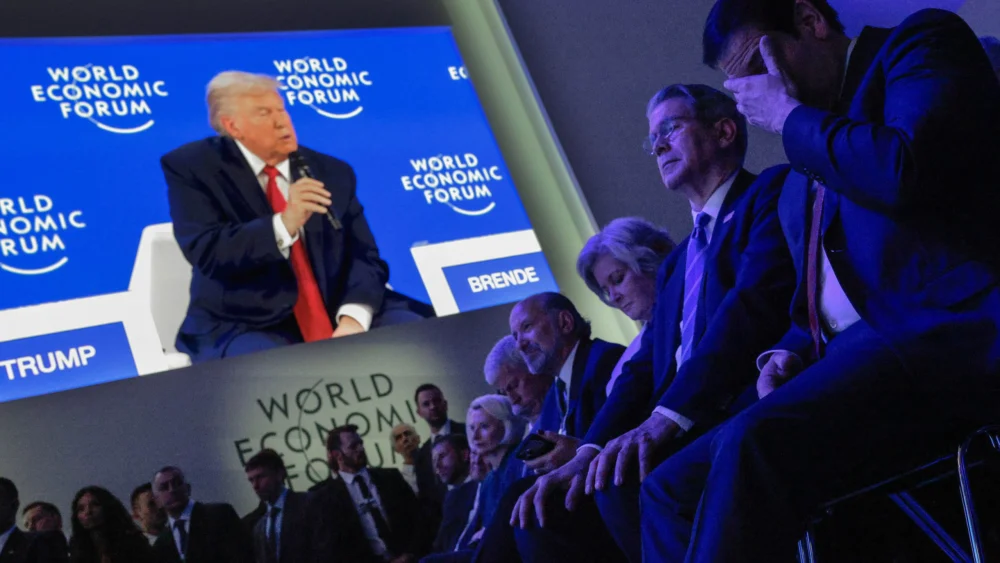
The annual World Economic Forum in Davos, a gathering of the world’s most influential figures, is ostensibly a forum for discussing global challenges and forging solutions. However, the experience on the ground often feels less like a productive policy debate and more like a meticulously curated display of power, influence, and sometimes, sheer absurdity. This year, the frigid Alpine air was, paradoxically, overshadowed by a palpable warmth—both meteorological and metaphorical—and a distinct scent of self-importance.
The unseasonably mild weather, attributed to a "föhn" wind, provided a stark contrast to the usual icy conditions. While the crisp air usually complements the image of global leaders clad in tailored suits and sturdy snow boots, this year, the streets of Davos were surprisingly balmy. This meteorological anomaly, however, served as an apt, albeit unintentional, metaphor for the prevailing atmosphere within the Congress Center: a significant amount of "hot air."
This was never more evident than during President Donald Trump’s lengthy address. Arriving with the fanfare befitting his status, Trump held the assembled elite captive for over 90 minutes with a meandering discourse that touched upon an eclectic array of topics, from the economy and Greenland to windmills, Switzerland, Rolexes, Venezuela, and drug prices. His speech, however, was a tapestry woven with grievances, unsubstantiated claims, and outright falsehoods, a stark reminder of the potent blend of populism and performance that continues to shape global politics.
A particularly egregious example of Trump’s factual liberties involved his assertion about wind energy in China. He claimed that despite being a global leader in manufacturing windmill components, China did not actually utilize them for energy generation. This statement was demonstrably false; China is, in fact, the world leader in wind power generation. Such pronouncements, delivered with unshakeable conviction, highlight a disquieting trend of misinformation gaining traction even in circles that ought to be bastions of evidence-based discourse.
The author, unfortunately, was unable to witness this "spectacle" firsthand from within the Congress Hall. By the time they arrived, a massive throng of attendees had created an impenetrable scrum, a testament to Trump’s enduring ability to command attention. This logistical challenge proved to be a recurring theme throughout the author’s experience, as access to key sessions and events was often dictated by a complex hierarchy of badges and perceived importance.
Earlier that day, the author had been engaged in moderating a panel titled "The Intelligent Co-Worker: AI Agents in the Workplace." This session brought together a diverse group of experts, each offering a unique perspective on the burgeoning integration of artificial intelligence into professional life. Christoph Schweizer, CEO of Boston Consulting Group, provided a macro-strategic overview; Enrique Lores, CEO of HP, shared insights from both hardware and large enterprise sectors; Kian Katanforoosh, CEO of Workera, offered an insider’s view on workforce training and transformation; Manjul Shah, CEO of Hippocratic AI, discussed the application of AI in the high-stakes field of healthcare; and Kate Kallot, CEO of Amini AI, brought a crucial perspective from the global South, particularly Africa.
The panel’s discussions revealed a nuanced understanding of AI’s role. Notably, most speakers deliberately avoided the term "co-worker," with some even eschewing the label "agent." Instead, the consensus leaned towards a vision of humans and AI collaborating, augmenting human capabilities. Shah, for instance, recounted how AI agents had been instrumental in conducting health and safety checks on thousands of individuals in Texas during a heatwave, showcasing AI’s potential for impactful real-world applications. The session, accessible online, offered a glimpse into a more productive and forward-thinking aspect of the Davos agenda.
However, the sheer volume of attendees eager to hear Trump speak created a logistical nightmare. The push to enter the Congress Hall was so intense that it spilled over into adjacent overflow rooms, with the author ultimately finding themselves in a third overflow space, the dense crowd reminding them of a packed concert. The experience of navigating this human tide, exacerbated by Trump’s speech extending well beyond its allotted time, underscored the often-overlooked practicalities and the sometimes-overwhelming scale of such high-profile events.
The surreal experience of walking through the Congress Center’s halls while Trump was speaking was profound. The global elite, typically engaged in a multitude of simultaneous discussions and networking, were almost uniformly captivated by their screens, all tuning into the same broadcast. This collective focus, even on a potentially controversial figure, highlighted the magnetic pull of celebrity and power in shaping the Davos narrative. The announcement of Trump’s forthcoming "Board of Peace" address, and the anticipated presence of Elon Musk, further cemented the day’s focus on high-profile attention capture.
Davos, it appears, operates on a distinct social stratification, with various markers of status dictating access and perceived importance. The author’s white participant badge, earned for moderating panels, granted broad access, serving as its own subtle status symbol. Their accommodation in Klosters, a neighboring town a 40-minute train ride away, placed them outside the inner circle of elite lodgings.
More subtle, yet equally significant, are the unspoken codes of engagement. The seemingly innocuous question, "Is this your first time at Davos?" can, in fact, be a subtle probe into an individual’s tenure and, by extension, their importance. Those who are "big deals" have invariably been attending for years, establishing a long-standing presence within the elite circle.
However, the most telling illustration of this status-driven environment, and indeed, the very essence of the "cold flex," occurred during a casual conversation. While changing back into snow boots, the author engaged with a woman who revealed her part-time residency in California. She then casually remarked, "But I don’t think I’ll stay there much longer, due to the new tax law." This seemingly offhand comment, delivered with an air of mild inconvenience, was, in fact, a potent display of wealth and privilege. The newly proposed California tax legislation, designed to target billionaires, was precisely the kind of policy that someone with substantial means might find inconvenient enough to consider relocating. This "ice cold flex" perfectly encapsulated the peculiar reality of Davos, where immense wealth and influence are often displayed with a practiced nonchalance, a subtle reminder of the vast gulf between the attendees and the rest of the world. Welcome to Davos, indeed.