Pradipta eManuel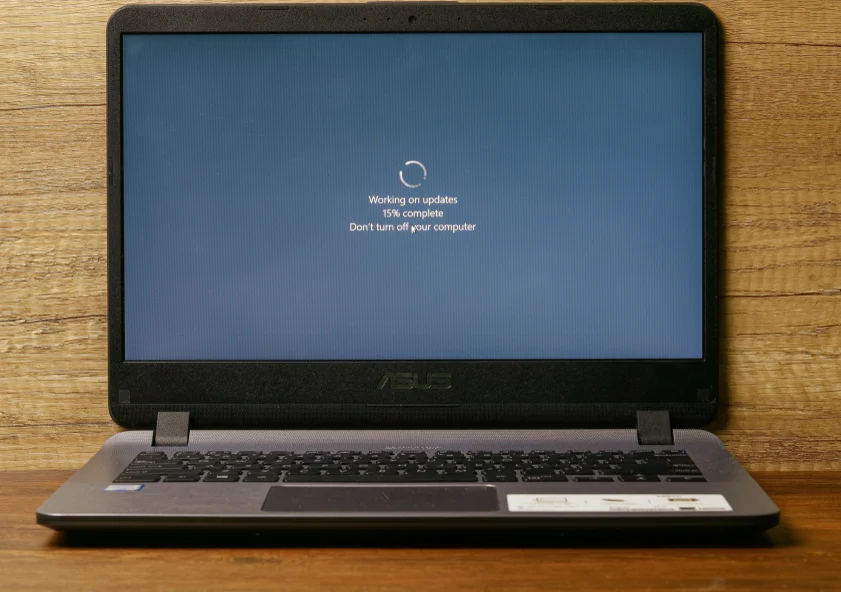
Microsoft has unleashed a significant security update for January 2026, addressing a staggering 113 vulnerabilities across its Windows operating systems and associated software. Of particular concern, eight of these flaws have been classified as "critical," with one actively being exploited by malicious actors. This "Patch Tuesday" rollout underscores the perpetual cat-and-mouse game between software vendors and cybercriminals, demanding swift action from system administrators to safeguard their environments.
At the heart of this month’s critical vulnerabilities is CVE-2026-20805, a flaw within the Desktop Window Manager (DWM). Kev Breen, senior director of cyber threat research at Immersive, highlighted that despite a moderate CVSS score of 5.5, Microsoft’s confirmation of active exploitation in the wild signifies a tangible threat. Breen elaborated on the potential impact, explaining that vulnerabilities of this nature can be weaponized to circumvent Address Space Layout Randomization (ASLR), a fundamental security mechanism designed to prevent memory-based attacks. "By revealing where code resides in memory, this vulnerability can be chained with a separate code execution flaw, transforming a complex and unreliable exploit into a practical and repeatable attack," Breen stated. He further emphasized the challenge for defenders, noting Microsoft’s limited disclosure of associated exploit components, which hampers proactive threat hunting and underscores the paramount importance of rapid patching.
Chris Goettl, vice president of product management at Ivanti, echoed these sentiments, pointing out that CVE-2026-20805 impacts all currently supported and extended security update versions of Windows. Goettl cautioned against underestimating the threat based on its "Important" rating and relatively low CVSS score, asserting that a risk-based prioritization methodology necessitates treating this vulnerability with a higher degree of severity than its vendor-assigned rating or CVSS score might suggest.
Beyond the DWM vulnerability, this month’s critical patches also address two remote code execution flaws in Microsoft Office, identified as CVE-2026-20952 and CVE-2026-20953. These bugs are particularly insidious, as they can be triggered simply by viewing a specially crafted message within the Outlook Preview Pane, requiring no direct user interaction beyond opening an email. This highlights the ongoing threat posed by sophisticated phishing and social engineering tactics that leverage application-specific vulnerabilities.
In a concerning parallel to previous updates, Microsoft has once again removed legacy modem drivers from Windows, this time addressing CVE-2023-31096. Adam Barnett of Rapid7 noted that this elevation of privilege vulnerability in a modem driver is not new, having been publicly disclosed over two years prior. The removal of the agrsm64.sys and agrsm.sys files, originally developed by a now-defunct third party and present in Windows for decades, signals Microsoft’s ongoing efforts to purge deeply embedded, potentially exploitable code. Barnett raised pertinent questions about the potential for other legacy modem drivers to remain on systems and the continued emergence of elevation-to-SYSTEM vulnerabilities from such "dusty old device drivers." He cautioned that the mere presence of these drivers, irrespective of whether a modem is connected, renders systems vulnerable. The 2023 write-up and the 2025 removal of a similar Agere modem driver serve as strong indicators for threat actors seeking Windows exploits.
Another critical vulnerability drawing significant attention from Immersive, Ivanti, and Rapid7 is CVE-2026-21265, a Security Feature Bypass affecting Windows Secure Boot. This vital feature, designed to protect against rootkits and bootkits, relies on cryptographic certificates. The impending expiration of these certificates in June and October 2026 presents a ticking clock. Without the updated 2023 certificates, Windows devices that have not undergone the necessary remediation may become unable to receive crucial Secure Boot security fixes, leaving them exposed to advanced persistent threats. Barnett advised extreme caution when updating bootloaders and BIOS, emphasizing the need for thorough preparation to avoid rendering systems unbootable. He remarked on the longevity of the Microsoft root certificates, which have been instrumental in the Secure Boot ecosystem since the era of Stuxnet, and the urgency of adopting the replacement certificates issued in 2023, which were part of the remediation for the BlackLotus bootkit exploit.
The scope of this Patch Tuesday extends beyond Microsoft’s own products. Mozilla has released updates for Firefox and Firefox ESR, addressing a total of 34 vulnerabilities, with two (CVE-2026-0891 and CVE-2026-0892) suspected of active exploitation. These are resolved in Firefox 147 (MFSA2026-01) and Firefox ESR 140.7 (MFSA2026-03) respectively. Goettl anticipates similar updates from Google Chrome and Microsoft Edge this week, noting a high-severity vulnerability in Chrome WebView (CVE-2026-0628) that was already patched in the January 6th Chrome update.
As always, the SANS Internet Storm Center provides a detailed breakdown of each patch by severity and urgency, serving as an invaluable resource for administrators. The askwoody.com website is also a recommended destination for administrators seeking information on potential patch conflicts or issues. Users encountering any problems during the installation of the January 2026 patches are encouraged to report them in the comments section of relevant security advisories. The sheer volume and critical nature of the vulnerabilities addressed this month underscore the relentless and evolving threat landscape, demanding a proactive and vigilant approach to cybersecurity.