Imroatul Nasiyah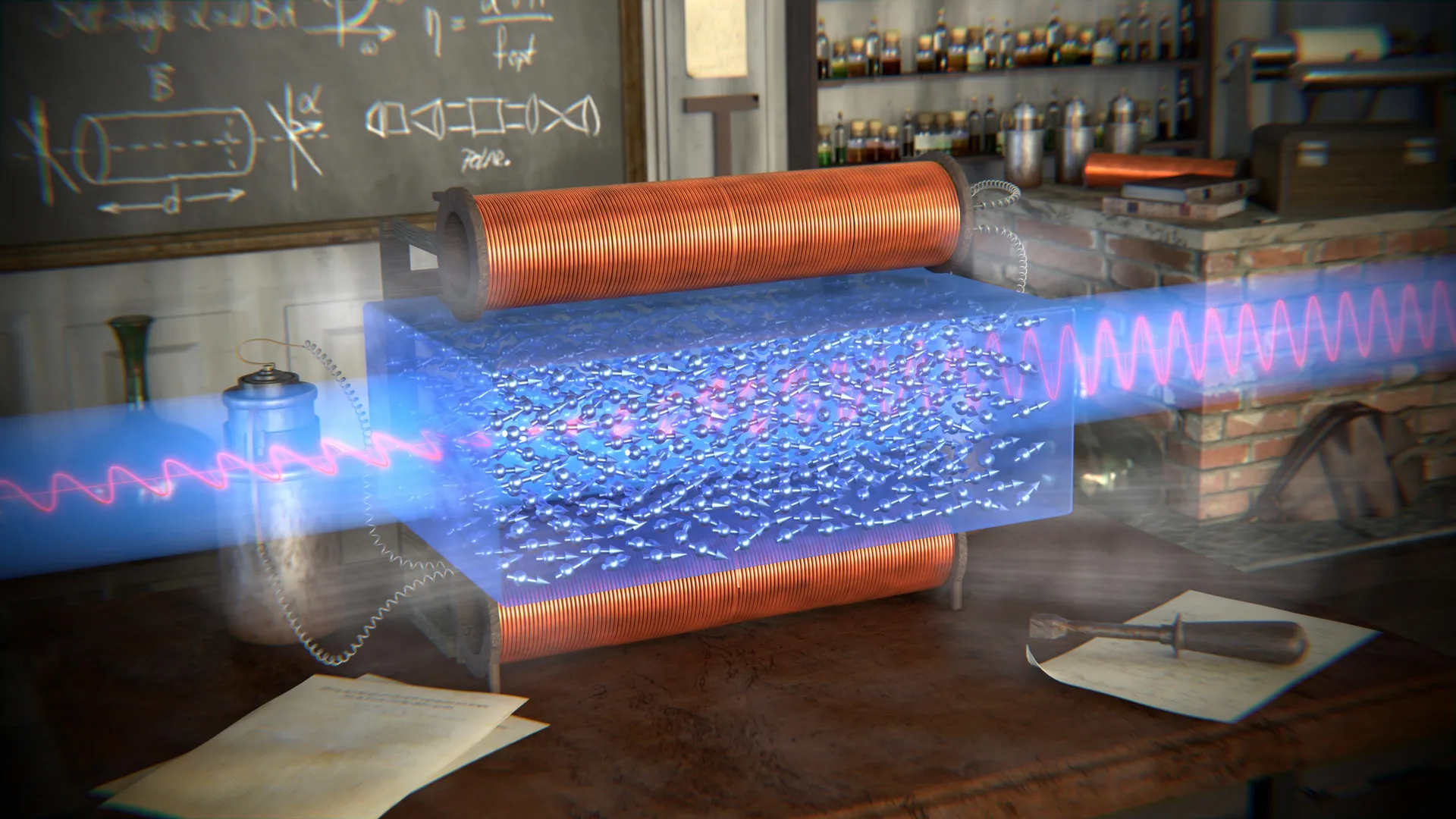
Researchers at the prestigious Hebrew University of Jerusalem have fundamentally reshaped our understanding of light and its interaction with the material world, announcing a groundbreaking discovery that challenges a long-held scientific tenet. For close to two centuries, the scientific community has operated under the assumption that only the electric component of light played a significant role in the phenomenon known as the Faraday Effect. However, a meticulous new study, spearheaded by Dr. Amir Capua and Benjamin Assouline from the university’s Institute of Electrical Engineering and Applied Physics, has definitively proven that the magnetic component of light is not merely a passive observer but an active participant, exerting a direct and measurable influence on matter. This revolutionary insight, published in the esteemed journal Scientific Reports by Nature, not only corrects a historical misconception but also unlocks exciting new avenues for technological advancement in fields ranging from advanced optics and spintronics to the nascent frontiers of quantum technologies.
The Faraday Effect, first observed by Michael Faraday in 1845, describes the fascinating phenomenon where the plane of polarization of light rotates as it traverses through a transparent medium when that medium is subjected to a static magnetic field. This effect has been a cornerstone in the study of magneto-optical properties of materials, forming the basis for numerous optical devices and sensing technologies. For generations, the prevailing explanation for this rotation has attributed it solely to the interaction between the electric field of the light wave and the electric charges within the material. It was theorized that the external magnetic field influenced the movement of these charges, thereby affecting the light. However, the Hebrew University team’s comprehensive theoretical work, supported by rigorous calculations, has now demonstrated that this established narrative is incomplete. They have provided the first concrete theoretical evidence that the oscillating magnetic field inherent to light itself directly contributes to the Faraday Effect, acting in concert with the electric field to induce the observed polarization rotation.
Dr. Capua eloquently articulated the essence of their discovery: "In simple terms, it’s an interaction between light and magnetism. The static magnetic field ‘twists’ the light, and the light, in turn, reveals the magnetic properties of the material. What we’ve found is that the magnetic part of light has a first-order effect, it’s surprisingly active in this process." This statement underscores the paradigm shift their research represents. Instead of light merely illuminating matter and being passively influenced by external magnetic fields, the study reveals that light, through its intrinsic magnetic field, actively probes and influences the magnetic characteristics of the material it encounters. This is a profound redefinition of the light-matter interaction, moving beyond a purely electromagnetic interaction dominated by the electric field to a more holistic magneto-optical coupling.
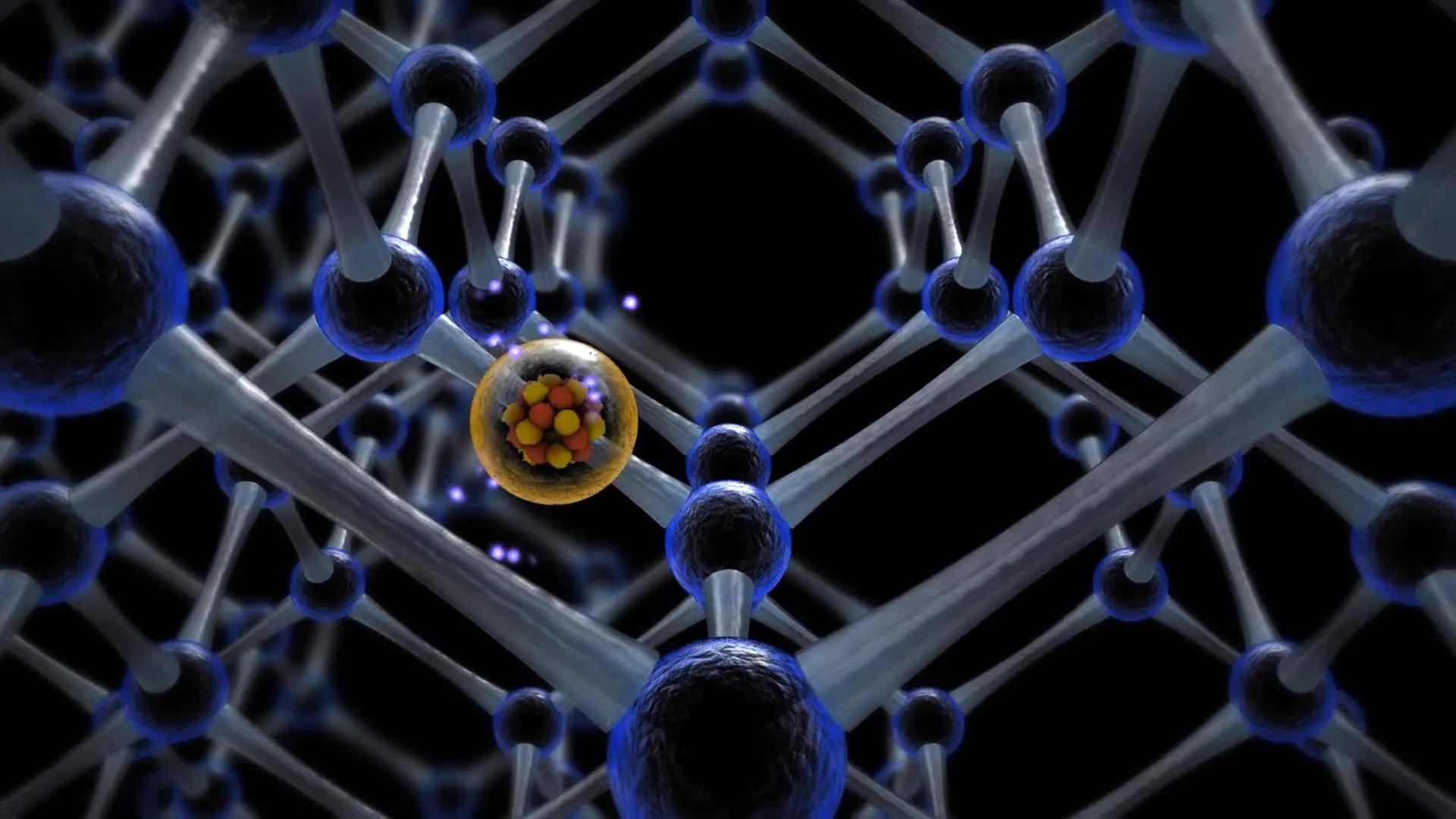
The historical perspective is crucial to appreciating the magnitude of this finding. The scientific framework that has guided research and technological development in optics and magnetism for nearly two centuries has been based on a simplified model. The new study dismantles this model by demonstrating that the magnetic field of light directly interacts with atomic spins – the intrinsic angular momentum of electrons – a contribution that had been largely dismissed as negligible. This interaction with spins is fundamentally different from the interaction of the electric field with charge carriers. While the electric field influences the orbital motion of electrons, the magnetic field of light directly exerts torque on the electron’s magnetic dipole moment, which is directly related to its spin. This direct coupling to spins is what allows light to "read" and influence the magnetic state of a material in a way that was previously unacknowledged.
The team’s methodology involved sophisticated theoretical calculations, drawing inspiration from the renowned Landau-Lifshitz-Gilbert (LLG) equation. This equation is a fundamental tool in the study of magnetism, describing the dynamics of magnetic moments in materials under the influence of external fields and damping. By applying and extending the principles of the LLG equation to the context of light-matter interaction, Capua and Assouline were able to quantify the magnetic torque generated by light’s magnetic field within a material. Their calculations revealed that this torque is not insignificant but, in fact, comparable in its mechanism to the torque generated by an external static magnetic field. This quantitative analysis provides a robust foundation for their assertion that light possesses the capacity to magnetically influence matter, moving it from a theoretical possibility to a calculated reality.
To validate their theoretical model and quantify the magnetic contribution of light, the researchers applied their findings to Terbium Gallium Garnet (TGG). TGG is a well-established magneto-optical material, frequently employed in experiments investigating the Faraday Effect due to its strong Faraday rotation. Their analysis of TGG yielded remarkable results, indicating that the magnetic component of light is responsible for a substantial portion of the observed polarization rotation. Specifically, they found that light’s magnetic field accounts for approximately 17% of the Faraday rotation within the visible spectrum and an even more impressive 70% in the infrared region. These figures are not mere theoretical curiosities; they represent significant contributions that cannot be ignored when seeking to accurately model and predict the behavior of light in magnetic materials. The stark difference in contribution across different spectral ranges also suggests that the magnetic interaction is wavelength-dependent, opening up further avenues for specialized applications.
Benjamin Assouline eloquently summarized the broader implications of their work: "Our results show that light ‘talks’ to matter not only through its electric field, but also through its magnetic field, a component that has been largely overlooked until now." This sentiment highlights the paradigm shift towards a more comprehensive understanding of light as a force with dual electromagnetic capabilities that directly interact with the magnetic degrees of freedom in matter. The implications of this discovery are far-reaching and have the potential to revolutionize numerous technological domains.
In the realm of optical data storage, a deeper understanding of light’s magnetic influence could lead to the development of novel methods for writing and reading data at the magnetic level, potentially enabling higher storage densities and faster access times. The field of spintronics, which aims to harness the electron’s spin in addition to its charge for electronic devices, stands to benefit immensely. By understanding how light’s magnetic field can manipulate electron spins, researchers could design new spintronic devices that are controlled by light, offering unprecedented functionality and efficiency. This could pave the way for faster, more energy-efficient computing and memory technologies.
Furthermore, the emerging field of quantum technologies, particularly spin-based quantum computing, could see significant advancements. Quantum computers rely on the precise control of quantum bits, or qubits, which can be realized using the spin of electrons or other quantum systems. The ability of light’s magnetic field to directly interact with and manipulate these spins could provide a powerful new tool for controlling and entangling qubits, a critical step towards building robust and scalable quantum computers. This could accelerate the development of quantum algorithms for solving complex problems currently intractable for classical computers, impacting fields like drug discovery, materials science, and artificial intelligence.
The research team’s findings represent a significant leap forward in our fundamental understanding of the universe. By revealing the hidden magnetic prowess of light, they have not only corrected a long-standing scientific misconception but have also illuminated a path towards innovative technologies that could shape the future. The implication that light is not merely a passive carrier of information but an active magnetic manipulator of matter opens up a vast landscape of possibilities, promising to redefine our interaction with the physical world and usher in an era of unprecedented technological progress. The 180-year-old secret of light’s magnetic influence has finally been unveiled, promising a brighter, and magnetically more interactive, future.